 Rachel Summers
This article is for informational purposes only and does not constitute medical advice. If you’re concerned about your alcohol intake or rely on it to sleep, speaking with your doctor is a good first step.
Why Caffeine and Alcohol Are Big Sleep Disruptors
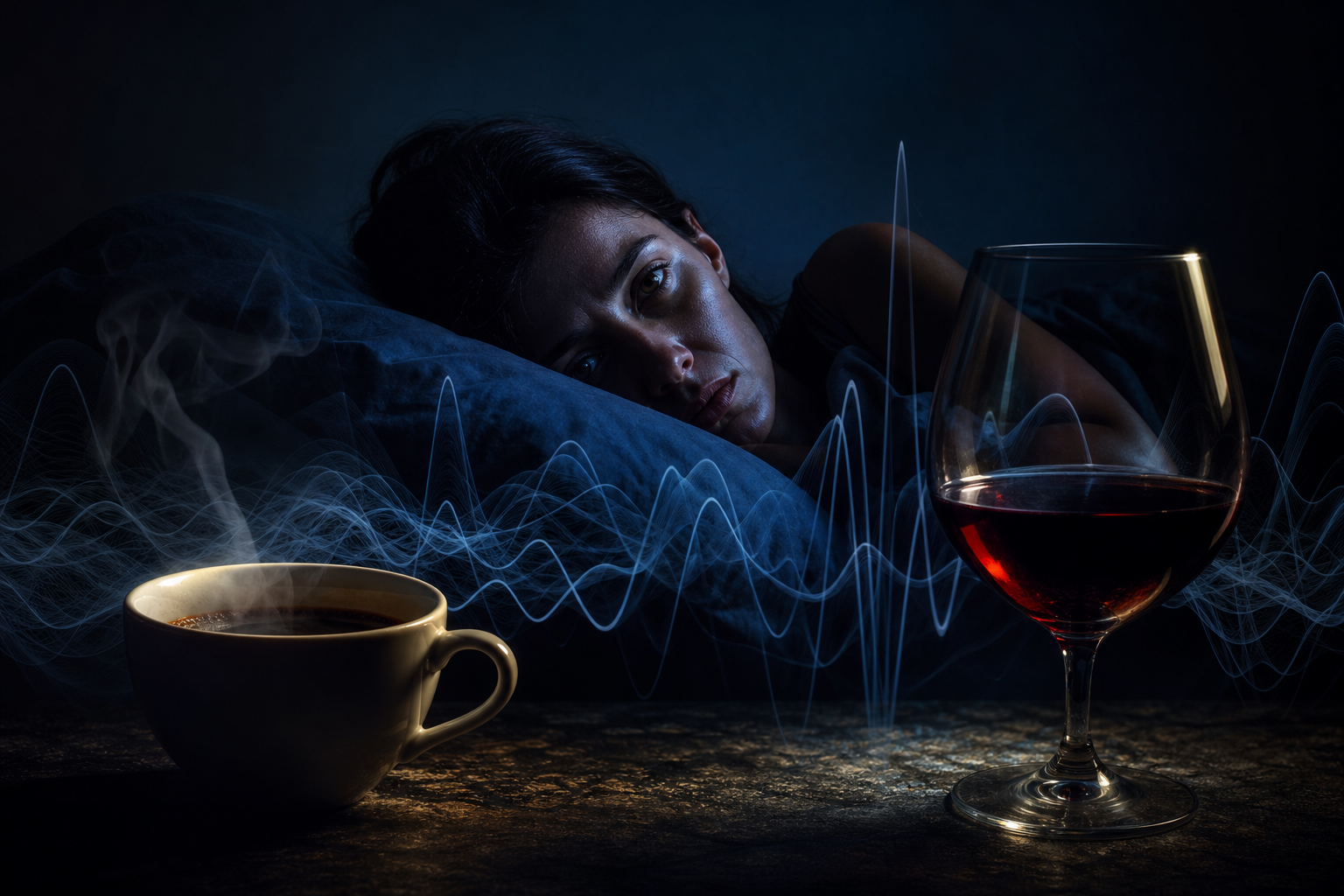
Of all the things that quietly sabotage sleep, caffeine and alcohol are probably the two most common — and the two most underestimated. Part of the problem is timing: both are often consumed hours before bed, so the connection to that night’s restless sleep isn’t always obvious. The other part is that both substances feel like they’re helping in the moment — caffeine gets you through the afternoon slump, and a drink in the evening feels relaxing — even as they’re working against your sleep later on.
Neither one is the enemy. But understanding how they actually affect your sleep architecture makes it much easier to make small timing changes that have an outsized impact on how rested you feel.
How Caffeine Affects Sleep
Caffeine works by blocking adenosine, a chemical that builds up in your brain throughout the day and makes you feel sleepy. Block adenosine, and you feel more alert — which is exactly the point. The problem is that caffeine doesn’t just disappear once it’s done its job.
When to Cut Off Caffeine for Better Sleep
Caffeine has a half-life of roughly five to six hours in most adults — meaning if you have a coffee at 2pm, around half of that caffeine is still active in your system at 7-8pm. For some people, especially slower metabolisers, it can take even longer to clear. That afternoon coffee that “doesn’t affect your sleep” may still be playing a quiet role in how long it takes you to fall asleep or how often you wake up.
A practical guideline: try cutting off caffeine by early-to-mid afternoon (roughly 8-10 hours before your usual bedtime) and see what changes after a week or two. If you’re a particularly sensitive sleeper, an even earlier cutoff may make a noticeable difference.
Caffeine and Sleep Quality
Even when caffeine doesn’t stop you from falling asleep, it can still reduce the amount of deep, restorative sleep you get later in the night. Some research suggests caffeine consumed even six hours before bed can measurably reduce total sleep time and deep sleep, without the person necessarily noticing they took longer to fall asleep. In other words, you might feel like you slept fine — but slept lighter than you would have otherwise.
How Alcohol Affects Sleep
Alcohol has a reputation as a sleep aid — it’s sedating, it relaxes you, and for many people it genuinely does help them fall asleep faster. The catch is what happens in the second half of the night, once your body has started metabolising it.
Alcohol and Sleep Fragmentation
As your body processes alcohol over a few hours, its sedative effect wears off and is often followed by a kind of rebound — lighter sleep, more frequent waking, and reduced REM sleep, which is important for memory, mood regulation, and feeling mentally refreshed. This is why a night that includes a couple of drinks can feel like “enough hours” but still leave you feeling foggy and unrested the next day.
Alcohol and Morning Feelings
Alcohol is also a diuretic, which means more trips to the bathroom overnight — another source of fragmented sleep. And because alcohol relaxes the muscles in your throat, it can worsen snoring and breathing-related sleep issues, even in people who don’t normally snore. The combination of lighter sleep, more waking, and reduced REM is a big part of why “I slept eight hours but feel terrible” mornings often follow an evening with alcohol.
Practical Tips to Protect Sleep
None of this means you need to cut out coffee or wine entirely — for most people, it’s about timing and amounts rather than total avoidance.
- Set a caffeine cutoff time — roughly 8-10 hours before bed is a reasonable starting point, earlier if you’re sensitive.
- Watch hidden caffeine sources — tea, chocolate, some soft drinks, and pre-workout supplements all count.
- If you drink alcohol, try finishing earlier — giving your body a few hours to process it before bed reduces (though doesn’t eliminate) the impact on later sleep.
- Notice patterns — try a couple of alcohol-free nights and compare how you feel the next morning. Many people are surprised by the difference.
- Have a caffeine-free evening alternative ready — herbal tea, sparkling water, or a non-alcoholic drink you actually enjoy makes the swap easier.
- Morning: Have your coffee or tea as normal — this is the lowest-impact time for caffeine.
- Early afternoon: Have your last caffeinated drink by around 2pm if you go to bed at 10-11pm.
- Evening: If you’re having a drink, try to finish it at least 3 hours before bed, and alternate with water.
- Before bed: Swap a nightcap for a caffeine-free tea or another calming ritual from your wind-down routine.
If you’re using alcohol specifically as a sleep aid because you struggle to wind down, it’s worth looking at the underlying issue — our guides on how to fall asleep faster and sleep hygiene cover non-alcohol ways to relax before bed that don’t come with the same trade-offs.
Frequently Asked Questions
How does caffeine affect sleep?
Caffeine blocks adenosine, a chemical that builds up during the day and promotes sleepiness. It can make it harder to fall asleep and reduce the amount of deep sleep you get, even when consumed several hours before bed, due to its long half-life.
How many hours before bed should I stop caffeine?
A common guideline is 8-10 hours before bed, given caffeine’s roughly 5-6 hour half-life. If you’re particularly sensitive to caffeine or notice trouble sleeping despite an afternoon cutoff, try moving it earlier.
Does alcohol help you sleep?
Alcohol can help you feel sleepy and fall asleep faster initially, but as your body metabolises it, sleep becomes lighter and more fragmented, with less REM sleep. Overall sleep quality is usually worse, even if total sleep time looks similar.
Can one drink per night affect sleep?
Yes — even moderate amounts of alcohol can measurably reduce REM sleep and increase nighttime waking for some people, though the effect varies by individual, body weight, and timing relative to bedtime.
What are caffeine-free alternatives?
Herbal teas like chamomile, rooibos, or peppermint, decaffeinated coffee, sparkling water, or warm milk are common substitutes that can fill the same “ritual” role without the stimulant effect.
How do I stop using alcohol to sleep?
Start by replacing the role alcohol plays — usually relaxation or winding down — with another activity, such as a warm shower, reading, gentle stretching, or breathing exercises. Reducing gradually rather than all at once, and addressing the underlying stress or sleep anxiety, tends to work better than going cold turkey on both at once. If alcohol use feels difficult to control, talk to your doctor.
Simple “Caffeine & Alcohol Sleep Plan”
Rather than an all-or-nothing approach, try this simple timing-based plan for a week:
Give it a week and pay attention to how you feel in the mornings — for many people, this single change makes a bigger difference than almost anything else in their sleep routine. For the full picture on building better sleep habits, see our complete guide to sleep.
Related Reading:
Sleep: The Complete Guide to Better Rest, Recovery, and Health
How to Fall Asleep Faster
Sleep Hygiene: Build Better Sleep Habits
Best Foods for Sleep

 Rachel Summers
 Dr. Rachel Stone
 Sarah Mitchell
 Emma Thornton

 Daniel Brooks