 Dr. Rachel Stone
Vitamin B12 deficiency is more common than most people realise — and more dangerous. It develops silently over years, and by the time symptoms appear, neurological damage may already be underway. Knowing the signs early can prevent serious long-term consequences.
What Is Vitamin B12 and Why Do You Need It?
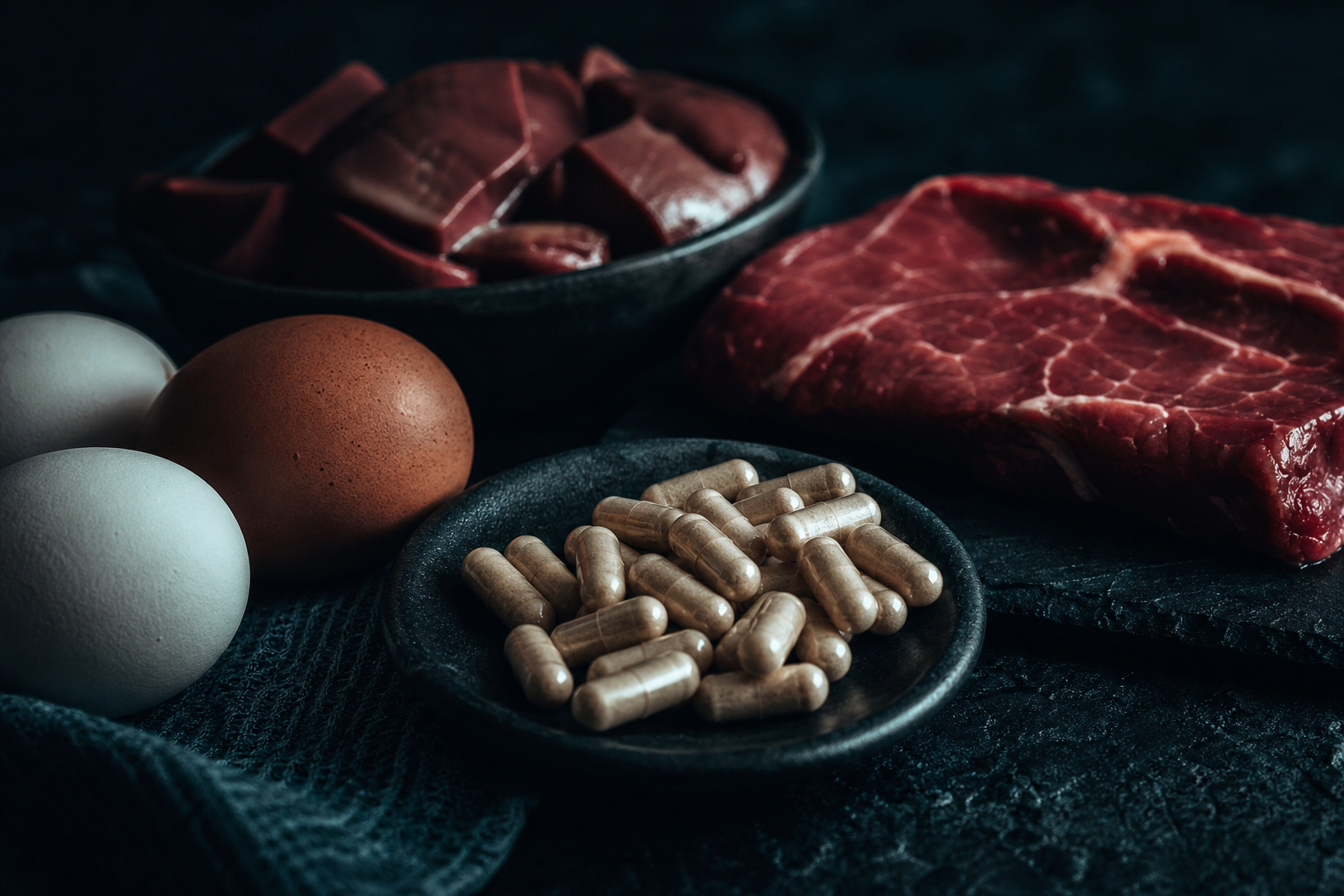
Vitamin B12 (cobalamin) is an essential water-soluble vitamin required for red blood cell formation, DNA synthesis, myelin sheath maintenance (the protective coating around nerves), and the conversion of homocysteine to methionine. It’s found almost exclusively in animal products — meat, fish, eggs, and dairy. The body stores B12 in the liver for 3–5 years, which is why deficiency develops slowly but can become severe.
B12 Deficiency Symptoms
Neurological Symptoms
- Tingling or numbness in hands and feet — one of the earliest and most characteristic signs; caused by demyelination of peripheral nerves
- Balance problems and difficulty walking — subacute combined degeneration of the spinal cord in severe cases
- Memory problems and cognitive decline — B12 deficiency is a reversible cause of dementia-like symptoms in older adults
- Depression and mood changes — B12 is required for serotonin and dopamine synthesis; deficiency directly impairs neurotransmitter production
- Brain fog and difficulty concentrating
- Muscle weakness
Blood and Energy Symptoms
- Extreme fatigue and weakness — B12 deficiency causes megaloblastic anaemia, where red blood cells are too large and dysfunctional to carry oxygen efficiently
- Shortness of breath — from anaemia reducing oxygen-carrying capacity
- Heart palpitations — from anaemia and elevated homocysteine affecting cardiac function
- Pallor or jaundice — from abnormal red blood cell breakdown
Mouth and Digestive Symptoms
- Glossitis — inflamed, swollen, smooth tongue (loss of papillae); a classic clinical sign
- Mouth ulcers
- Loss of appetite and weight loss
- Nausea and constipation
Vision Symptoms
- Blurred or disturbed vision — from optic nerve damage in severe deficiency
Who Is Most at Risk?
- Vegans and vegetarians — B12 is found almost exclusively in animal products; vegans must supplement
- Older adults (65+) — reduced stomach acid production impairs B12 absorption from food
- People taking metformin — metformin reduces B12 absorption; up to 30% of long-term users develop deficiency
- People taking PPIs or antacids long-term — stomach acid is required to release B12 from food
- People with pernicious anaemia — autoimmune condition destroying intrinsic factor (required for B12 absorption)
- People with Crohn’s disease or celiac disease — malabsorption impairs B12 uptake
- Heavy drinkers — alcohol impairs B12 absorption and storage
How Is B12 Deficiency Diagnosed?
A serum B12 blood test is standard. However, serum B12 can be normal even when cellular B12 is insufficient. More sensitive markers include methylmalonic acid (MMA) and homocysteine — both elevated in functional B12 deficiency even when serum B12 appears normal. If symptoms are present despite “normal” B12, ask your doctor to test MMA and homocysteine.
Frequently Asked Questions
The earliest signs are often fatigue, weakness, and tingling or numbness in the hands and feet (peripheral neuropathy). Mood changes, brain fog, and memory difficulties are also early symptoms. A smooth, inflamed tongue (glossitis) is a classic clinical sign. Because B12 stores last 3–5 years, symptoms develop slowly and are often attributed to other causes before B12 deficiency is considered.
Yes — if caught early, B12 deficiency is fully reversible with supplementation or injections. Neurological symptoms from prolonged deficiency may take months to resolve and may not fully reverse if nerve damage is severe. This is why early detection matters — don’t wait until neurological symptoms appear. Blood symptoms (anaemia, fatigue) resolve more quickly than neurological ones.
The RDA for B12 is 2.4mcg/day. However, oral B12 supplements are typically taken at much higher doses (500–2000mcg) because only a small percentage is absorbed via passive diffusion when intrinsic factor is insufficient. High-dose oral B12 (1000–2000mcg daily) is as effective as B12 injections for most deficiency cases. Methylcobalamin is the preferred active form.
Yes — absolutely. B12 is not reliably found in plant foods (algae and fermented foods contain analogues that don’t function as B12). All vegans should supplement B12. The NHS, Vegan Society, and all major nutrition bodies recommend B12 supplementation for vegans. A typical dose of 250mcg daily or 2500mcg weekly provides adequate amounts even with imperfect absorption.
If you suspect B12 deficiency, see a healthcare provider for testing. This article is for informational purposes only and does not constitute medical advice.
Related reading: Signs of Magnesium Deficiency, Best Supplements for Energy, Vitamin D Benefits.
Important: If you take prescription medications, see our guide on fibre supplements and medication timing — fibre can affect how some medications are absorbed.


 Sarah Mitchell

 Emma Thornton
 Dr. Maya Chen
 Elena Voss
 Dr. Rachel Stone