 Dr. Rachel Stone
Over the last few years, seed oils have become one of the most hotly debated topics in nutrition. Some researchers and health advocates claim they’re driving modern chronic disease. Others call the concerns overblown. The truth is more nuanced than either camp lets on — but there are legitimate reasons why health-conscious people are taking a hard look at their cooking oil choices.
Here’s an honest, evidence-based breakdown of why some people consider seed oils harmful — and where the science actually stands.
What Are Seed Oils?
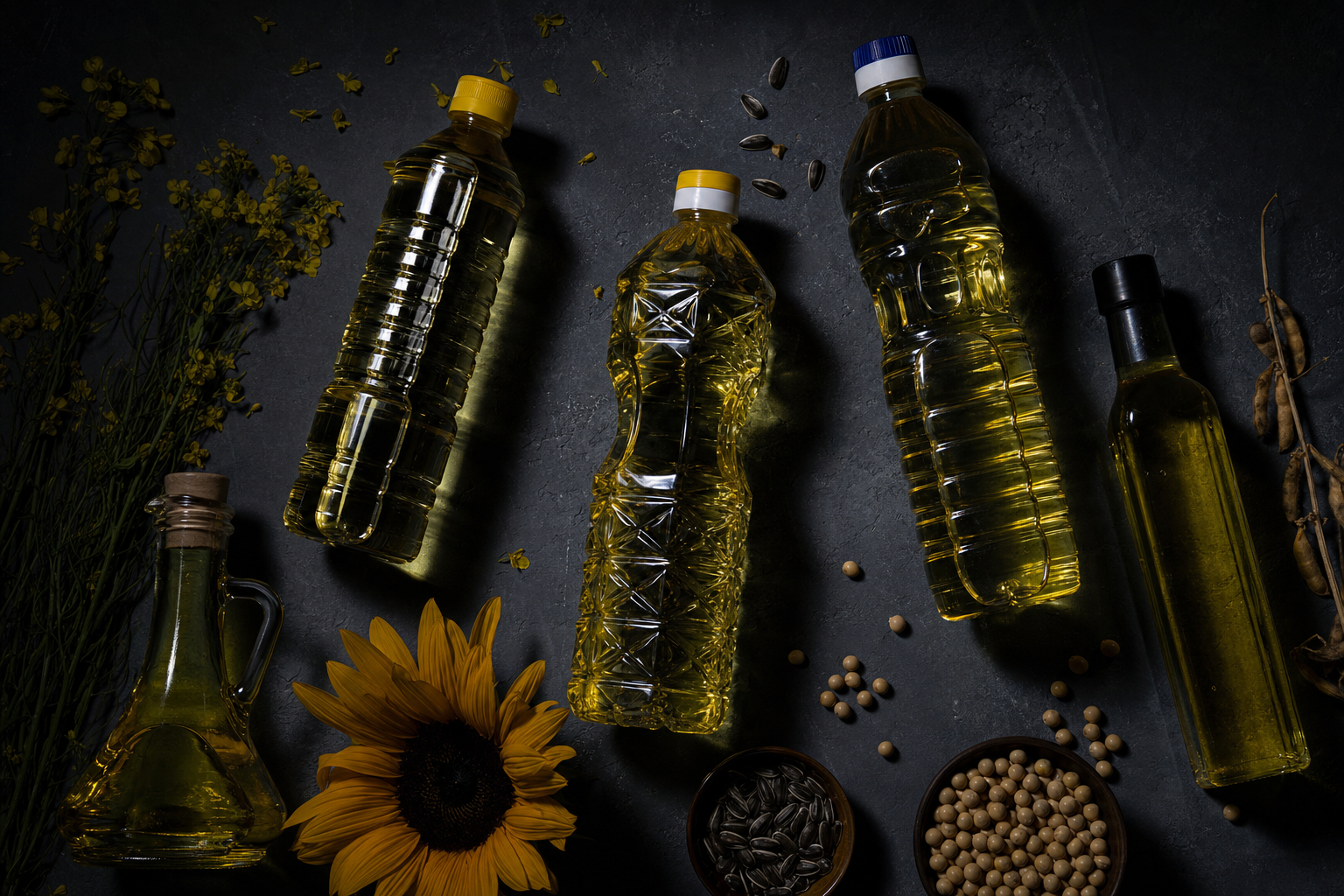
Seed oils are vegetable oils extracted from the seeds of plants rather than their flesh. The most commonly consumed include canola oil, soybean oil, sunflower oil, corn oil, cottonseed oil, grapeseed oil, and safflower oil. These are distinct from fruit oils like olive oil and avocado oil, which are cold-pressed from the fleshy part of the fruit without industrial chemical processing.
The Main Concerns About Seed Oils
1. They’re Extremely High in Omega-6 Fatty Acids
The primary concern with seed oils is their very high omega-6 polyunsaturated fat (PUFA) content — particularly linoleic acid. Sunflower oil is about 68% linoleic acid. Soybean oil around 51%. Corn oil around 58%.
The issue isn’t omega-6 itself — it’s the ratio of omega-6 to omega-3 in the modern diet. Humans evolved on a diet with roughly equal amounts of omega-6 and omega-3 fatty acids (a ratio of about 1:1 to 4:1). The modern Western diet has pushed this ratio to an estimated 15:1 to 20:1 in favour of omega-6, largely driven by the explosion in seed oil consumption since the 1960s. This imbalance is associated in observational research with increased inflammation and inflammatory disease risk — though proving direct causation in humans remains difficult.
2. They Oxidise Easily — Especially When Heated
Polyunsaturated fats are chemically unstable. The multiple double bonds in their molecular structure make them reactive — particularly with oxygen (oxidation) and heat. When seed oils are heated — especially repeatedly, as in commercial deep fryers — they generate oxidation by-products including aldehydes, lipid peroxides, and acrolein, which are toxic compounds associated with cellular damage, inflammation, and increased cancer risk in animal studies.
A 2015 study published in the journal Lipids tested common cooking oils heated to frying temperatures and found that refined vegetable oils generated significantly higher levels of toxic aldehydes than animal fats or olive oil under the same conditions. This is one of the more solid, reproducible concerns — not that seed oils at room temperature cause direct harm, but that their heating stability is genuinely inferior to more saturated fats.
3. Industrial Processing Strips Nutritional Value
Producing seed oils requires industrial extraction using chemical solvents (typically hexane), followed by degumming, refining, bleaching, and deodorizing. This process removes any natural antioxidants, vitamins, and phytochemicals that were present in the original seed. The result is a nutritionally empty fat that provides calories and fatty acids but none of the beneficial compounds that whole-food fat sources contain.
Compare this to extra virgin olive oil, which is cold-pressed with no chemical solvents and retains its full complement of polyphenols, oleocanthal, and vitamin E — compounds with demonstrated anti-inflammatory and health-protective properties.
4. They Entered the Food Supply Very Recently
Seed oils are a 20th-century invention. Prior to the 1900s, the primary cooking fats in most cultures were animal fats (lard, tallow, butter), olive oil, and coconut oil. The industrial seed oil industry was largely built on the back of the now-discredited saturated fat hypothesis — the idea that saturated fats caused heart disease and needed to be replaced by polyunsaturated alternatives.
As the original science behind this recommendation has been increasingly questioned (the saturated fat-heart disease link is far weaker than originally claimed), the rationale for replacing animal fats with seed oils has weakened considerably.
What Does the Current Research Say?
This is where it gets genuinely complicated. A 2025 meta-analysis of 30 randomised controlled trials found that increasing linoleic acid intake did not significantly increase inflammatory markers (CRP, IL-6, TNF-α) in humans. Research from Stanford in 2025 similarly found that linoleic acid in red blood cells was associated with lower, not higher, inflammation.
So the inflammatory hypothesis — that seed oils cause inflammation directly through their omega-6 content — isn’t as clean as some advocates claim. The picture is messier: seed oils in ultra-processed foods (which make up the majority of seed oil consumption) clearly correlate with poor health outcomes, but isolating the seed oil itself as the cause vs. the overall dietary pattern is methodologically difficult.
Where the evidence is cleaner: the heat stability concern is real and reproducible. Repeatedly heating seed oils generates genuine toxins. This is a practical reason to avoid seed oils for high-heat cooking regardless of the omega-6 debate.
Better Alternatives to Seed Oils
| Oil | Best For | Smoke Point | Stability |
|---|---|---|---|
| Extra virgin olive oil | Low-medium heat, dressings | 190°C (374°F) | High |
| Avocado oil | High-heat cooking | 270°C (520°F) | Very high |
| Coconut oil | Medium heat, baking | 177°C (350°F) | Very high |
| Beef tallow | High-heat cooking, frying | 250°C (480°F) | Very high |
| Ghee (clarified butter) | High-heat cooking | 250°C (480°F) | Very high |
| Butter | Low-medium heat, baking | 150°C (302°F) | High |
The Bottom Line
The case against seed oils is strongest in two areas: their use in high-heat cooking (where oxidation generates genuinely harmful compounds) and their dominant role in ultra-processed foods (which are unambiguously associated with poor health outcomes). The direct inflammation hypothesis is less settled.
The practical takeaway: you don’t need to panic about seed oils in a restaurant meal. But for your home cooking oil — the fat you use every day — choosing olive oil, avocado oil, butter, tallow, or ghee over refined seed oils is a defensible, evidence-informed choice.
Frequently Asked Questions
The main concerns are their very high omega-6 PUFA content (which may worsen the modern dietary omega-6:omega-3 imbalance), their instability when heated (generating toxic aldehydes and lipid peroxides), and their nutritional emptiness after industrial processing. The direct inflammation link is debated, but the heat stability concern has solid evidence behind it.
The evidence is mixed. In controlled human trials, linoleic acid (the main omega-6 in seed oils) doesn’t reliably increase inflammatory markers. However, the modern dietary ratio of omega-6 to omega-3 — largely driven by widespread seed oil consumption — is associated in observational research with increased chronic disease risk. Seed oils in ultra-processed foods are clearly linked to poor health, but isolating the oil itself as the cause is difficult.
The highest-omega-6, most industrially refined seed oils to minimise include: soybean oil, sunflower oil, corn oil, cottonseed oil, grapeseed oil, and safflower oil. Generic “vegetable oil” is typically a blend of these. Canola oil has a slightly better omega-6 profile but is still heavily refined.
The best everyday alternatives are extra virgin olive oil (for low-medium heat and dressings), avocado oil (for high-heat cooking), coconut oil (for baking and medium heat), beef tallow or ghee (for high-heat frying), and butter (for low-medium heat cooking and baking).
This article is for informational purposes only and does not constitute dietary or medical advice.
Related reading: Is Olive Oil a Seed Oil?.


 James Holloway