 Daniel Brooks
Does Intermittent Fasting Make You Live Longer?
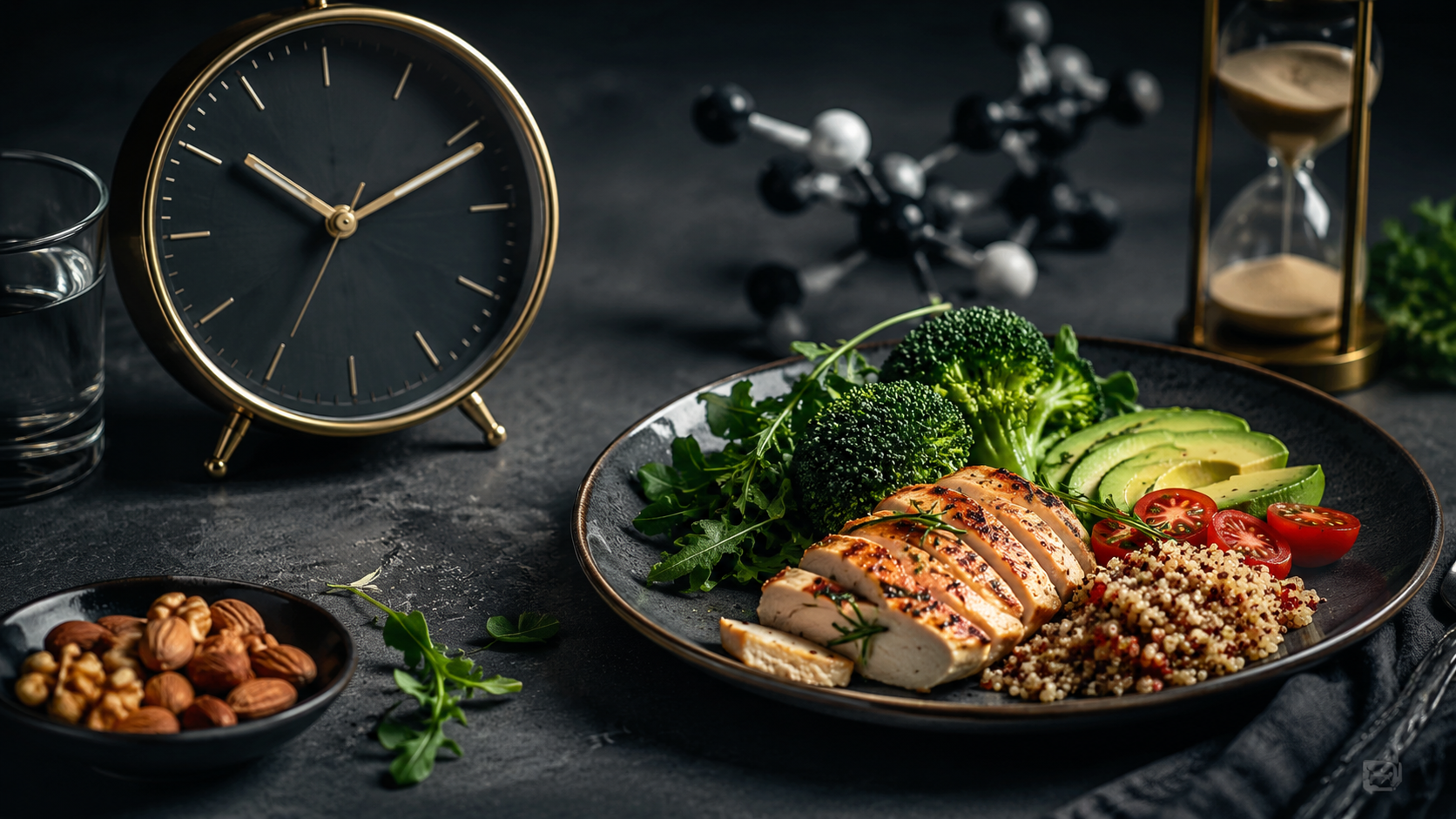
The honest answer is: probably not on its own — at least not in a way science can currently prove in humans. But that doesn’t mean the connection between fasting and longevity is hype. The biological mechanisms are real and well-documented. What’s missing is the human lifespan data, which is difficult to collect for obvious reasons.
Here’s where things actually stand in 2025: fasting reliably extends lifespan in mice, worms, and yeast. In humans, it improves several markers associated with longer, healthier life — insulin sensitivity, body weight, inflammation, blood pressure, and cholesterol. A 2025 review in Endocrine Reviews concluded that while the longevity pathways fasting activates are real, the evidence for life extension in people remains indirect. We know the roads it takes. We don’t yet know the destination. For a broader look at lifestyle factors linked to exceptional longevity, see our Blue Zones longevity habits guide.
The Biological Mechanisms — Why Scientists Take This Seriously
Autophagy
This is the body’s cellular housekeeping system — it breaks down and recycles damaged proteins and organelles. Autophagy declines with age, and its impairment is linked to neurodegeneration, cancer, and metabolic disease. Fasting is one of the strongest known triggers of autophagy in humans. Studies on Ramadan-style fasting found increased expression of autophagy-related genes within days of beginning a fasting protocol.
mTOR Inhibition
mTOR (mechanistic target of rapamycin) is a cellular growth signalling pathway. When nutrients are scarce — as during fasting — mTOR is suppressed, shifting cells toward maintenance and repair. Chronic mTOR activation is associated with accelerated aging; its inhibition in animal models consistently extends lifespan. This mechanism is closely related to how reducing inflammaging supports longer healthspan.
Improved Insulin Sensitivity
Chronically elevated insulin is associated with accelerated aging, metabolic disease, and cancer risk. Intermittent fasting reliably lowers fasting insulin and improves insulin sensitivity, even without significant weight loss. This is closely connected to the benefits seen in blood sugar and weight loss research.
Reduced Inflammation
Chronic low-grade inflammation — “inflammaging” — is a driver of most age-related diseases. Fasting reduces several inflammatory markers including CRP, IL-6, and TNF-alpha. The anti-inflammatory diet addresses similar pathways through food choices.
What the Human Evidence Actually Shows
Human studies on intermittent fasting have grown substantially, but they measure surrogate markers rather than lifespan itself. Time-restricted eating (eating within a 6–10 hour window each day) has the most consistent human evidence. Studies show improvements in blood pressure, fasting glucose, insulin, triglycerides, and body weight — particularly in people who are overweight or have metabolic syndrome.
The 5:2 diet (eating normally five days, restricting to around 500 calories on two non-consecutive days) shows similar metabolic improvements in human trials. Alternate day fasting produces the most dramatic metabolic changes but also the highest dropout rates.
Intermittent Fasting vs Caloric Restriction for Longevity
Caloric restriction — eating less overall without malnutrition — has the strongest and most consistent evidence for lifespan extension in animal models. Blue Zone populations, which contain the highest concentrations of centenarians, don’t practise structured intermittent fasting — but they do tend to eat less overall and stop eating before they feel completely full. Intermittent fasting may extend life partly by reducing overall calorie intake naturally.
Who Is Most Likely to Benefit
People with poor metabolic health — elevated fasting insulin, excess visceral fat, high triglycerides, or early signs of metabolic syndrome — have the most to gain from intermittent fasting. The improvements in metabolic markers are substantial and meaningful for long-term health. For people who are already lean and metabolically healthy, the additional longevity benefit is likely small.
Practical Considerations and Who Should Be Cautious
Intermittent fasting is not appropriate for everyone. People with a history of eating disorders, those who are underweight, pregnant or breastfeeding women, children and adolescents, and people with type 1 diabetes or those on insulin should avoid it without medical supervision. People on medications that require food need to time their fasting window carefully — including those taking fiber supplements alongside medications.
For most healthy adults, time-restricted eating (a 16:8 pattern) is the most sustainable starting point and the one with the most human safety data.
Frequently Asked Questions
Does intermittent fasting extend lifespan?
In animal models, yes — consistently and significantly. In humans, we don’t have direct lifespan evidence yet. What we have is strong evidence that fasting improves metabolic markers associated with longer, healthier life.
Does fasting make you live longer?
We don’t know for certain in humans. Fasting activates autophagy, reduces inflammation, improves insulin sensitivity, and suppresses mTOR — all pathways associated with slower aging. But a direct causal link to longer human lifespan hasn’t been established in a controlled trial.
What type of intermittent fasting is best for longevity?
Time-restricted eating (16:8 or similar) has the most human safety and efficacy data and is easiest to sustain long-term. For most people, consistent daily time restriction is more valuable than occasional prolonged fasting.
How long do you need to fast to trigger autophagy?
Autophagy begins to increase after roughly 12–16 hours of fasting and peaks somewhere around 24–48 hours. A standard 16:8 eating window will trigger some autophagy activation, particularly toward the end of the fasting window.
Is intermittent fasting better than caloric restriction for longevity?
The evidence currently favours overall caloric restriction as having the strongest longevity signal. Intermittent fasting may offer similar benefits — and for many people is more practical than counting calories — but whether the fasting timing itself adds anything beyond the calorie reduction is still an open question.
The Bottom Line
Intermittent fasting activates real biological mechanisms associated with slower aging. The animal evidence for lifespan extension is robust. The human evidence for improved metabolic health is solid. What we can’t yet say with certainty is whether structured fasting adds years to human life beyond what you’d get from simply maintaining good metabolic health through diet, exercise, and a healthy weight. If you find it a useful tool for maintaining metabolic health, the longevity case for continuing is reasonable.
Related reading: Intermittent Fasting Schedule, How to Increase Autophagy, Caloric Restriction and Longevity, Longevity Supplements.
What 2025–2026 Research Actually Shows
The intermittent fasting and longevity field moved significantly in 2025–2026. A 2026 report from UT Southwestern found that the refeeding metabolic shift — the period after a fast when the body transitions back to fed state — may be as important as the fasting period itself for lifespan effects. This challenges the simple “fasting = good” narrative and suggests that breaking your fast with nutrient-dense whole foods matters as much as the fast itself.
A landmark 2024 Nature study on genetically diverse mice confirmed that dietary restriction extended lifespan, but responses varied dramatically by sex and genetic background. A 2026 study (PMID 40950084) confirmed that IF responses are “not uniform” across individuals — genetics determine responsiveness. A significant 2025 finding: time-restricted eating without reduced calorie intake did not produce measurable metabolic benefit in at least one high-quality study. A 2025 critical assessment (PubMed 40700575) and the NIA are clear: longevity claims from IF in humans remain preliminary — no long-term mortality trials exist. The human evidence is almost entirely surrogate health outcomes, not extended lifespan.
How Long to Fast for Autophagy
Autophagy begins to activate after approximately 12–14 hours of fasting and reaches significant levels around 16–18 hours. This is why 16:8 fasting is the most popular longevity-focused protocol — it reliably activates autophagy while remaining sustainable daily. Maximum autophagy occurs during multi-day fasts (72+ hours), used occasionally by longevity practitioners but impractical as a daily approach.
Best Fasting Protocols for Longevity
| Protocol | Fast Duration | Autophagy | Sustainability |
|---|---|---|---|
| 16:8 | 16 hours daily | Moderate–strong | High |
| 18:6 | 18 hours daily | Strong | Moderate |
| 5:2 | 2 days/week at 500 kcal | Moderate on fast days | High |
| OMAD | 23 hours daily | Very strong | Low |
| 3–5 day water fast | 72–120 hours | Maximum | Very low |
In animal studies, yes — IF and caloric restriction consistently extend lifespan across multiple species. In humans, the evidence is promising but unproven — no long-term mortality trials exist. What is demonstrated is that IF improves multiple biomarkers associated with longevity: insulin sensitivity, inflammatory markers, blood pressure, triglycerides, and autophagy activation.
Autophagy begins to activate after approximately 12–14 hours of fasting and reaches significant levels around 16–18 hours. This is why 16:8 fasting is the most popular autophagy-focused protocol. Maximum autophagy activation occurs during multi-day fasts (72+ hours).
For most people, 16:8 daily fasting is optimal — it reliably activates autophagy, is sustainable as a daily practice, and has the broadest evidence base. The 2026 UT Southwestern research also suggests that breaking fasts with high-quality nutrient-dense foods is equally important to the fasting period itself.
2025-2026 Research Update
A 2026 report from UT Southwestern found the refeeding metabolic shift may be as important as fasting itself for lifespan — breaking your fast with nutrient-dense food matters as much as the fast period. A 2026 Nature study confirmed IF lifespan responses vary dramatically by sex and genetic background. A 2025 study found time-restricted eating without calorie reduction produced no measurable metabolic benefit. The NIA and BMJ (2024) confirm human longevity claims remain preliminary — no long-term mortality trials exist. What is proven: IF improves insulin sensitivity, inflammatory markers, triglycerides, and activates autophagy. Autophagy activates at 12-14 hours of fasting and peaks at 16-18 hours — which is why 16:8 is the optimal daily longevity protocol.
In animal studies yes — IF and caloric restriction consistently extend lifespan across multiple species. In humans the evidence is promising but unproven — no long-term mortality trials exist yet. What is demonstrated is that IF improves multiple longevity biomarkers: insulin sensitivity, inflammatory markers, blood pressure, triglycerides, and autophagy activation.
Autophagy begins activating after 12-14 hours of fasting and reaches significant levels around 16-18 hours. This is why 16:8 fasting is the most popular autophagy protocol — reliable activation while remaining sustainable as a daily practice.
16:8 daily fasting is optimal for most people — activates autophagy reliably, sustainable long-term, and has the broadest evidence base. The 2026 UT Southwestern research also shows that breaking fasts with high-quality nutrient-dense foods is equally important to the fasting period itself.


 Emma Thornton
 Daniel Brooks
 Rachel Summers

 James Hargreaves