 Sarah Mitchell
How the Gut Microbiome Changes as You Age
Your gut microbiome isn’t static — it shifts throughout your life, and some of the most significant changes happen after about 60. The most consistent finding across studies is a decline in microbial diversity — the number and variety of different bacterial species in the gut. Diversity tends to drop gradually through adulthood and more noticeably after 65, with steeper declines in people over 80 who are in poorer health or have reduced dietary variety. This is closely connected to the broader picture of healthy aging and what drives it.
Alongside reduced diversity, the composition shifts. Beneficial bacteria that ferment fibre and produce short-chain fatty acids — particularly Faecalibacterium prausnitzii, Bifidobacterium species, and butyrate-producing Lachnospiraceae — tend to decline. Meanwhile, more opportunistic bacteria tend to increase. This shift is associated with higher levels of systemic inflammation — what researchers now call “inflammaging.” See our guide on inflammation and longevity for more on how this drives aging.
Interestingly, studies on centenarians and healthy older adults show a different pattern — their microbiomes often retain higher diversity and more of the beneficial bacteria associated with younger people. This suggests that microbiome aging isn’t entirely fixed by chronological age, and that lifestyle factors play a significant role.
Why the Aging Gut Matters Beyond Digestion
The gut microbiome influences far more than digestion. Through the gut-brain axis, gut immune signalling, and the production of compounds like short-chain fatty acids and neurotransmitter precursors, the microbiome connects to systemic inflammation, immune function, metabolic health, and even mood and cognitive function.
As beneficial bacteria decline with age, the production of butyrate — a short-chain fatty acid that nourishes colon cells, reduces inflammation, and maintains the gut barrier — decreases. A leakier gut barrier allows bacterial products like lipopolysaccharides to enter the bloodstream, triggering the chronic low-grade inflammation described in our anti-inflammatory diet guide.
What Drives Microbiome Aging
- Reduced dietary diversity — older adults often eat less variety, particularly fewer fruits, vegetables, and fermented foods, which reduces the substrate feeding beneficial bacteria
- Decreased physical activity — exercise is consistently linked with better microbiome profiles at any age
- Medication accumulation — antibiotics, proton pump inhibitors, metformin, and many other commonly used drugs all affect the microbiome. See our guide on fiber supplements and medications for an example of how commonly used supplements interact with gut function
- Reduced stomach acid — naturally declines with age, altering the bacterial landscape of the upper GI tract
- Slower gut motility — food and bacteria spend longer in the gut, changing fermentation patterns and increasing SIBO risk. See our SIBO guide for more
- Social isolation and loneliness — associated with reduced diet quality and microbiome diversity in older adults
- Dental health — poor dentition leads to dietary changes that reduce fibre intake and microbiome diversity
What Actually Helps: Evidence-Based Approaches
Eat More Fibre — From Diverse Sources
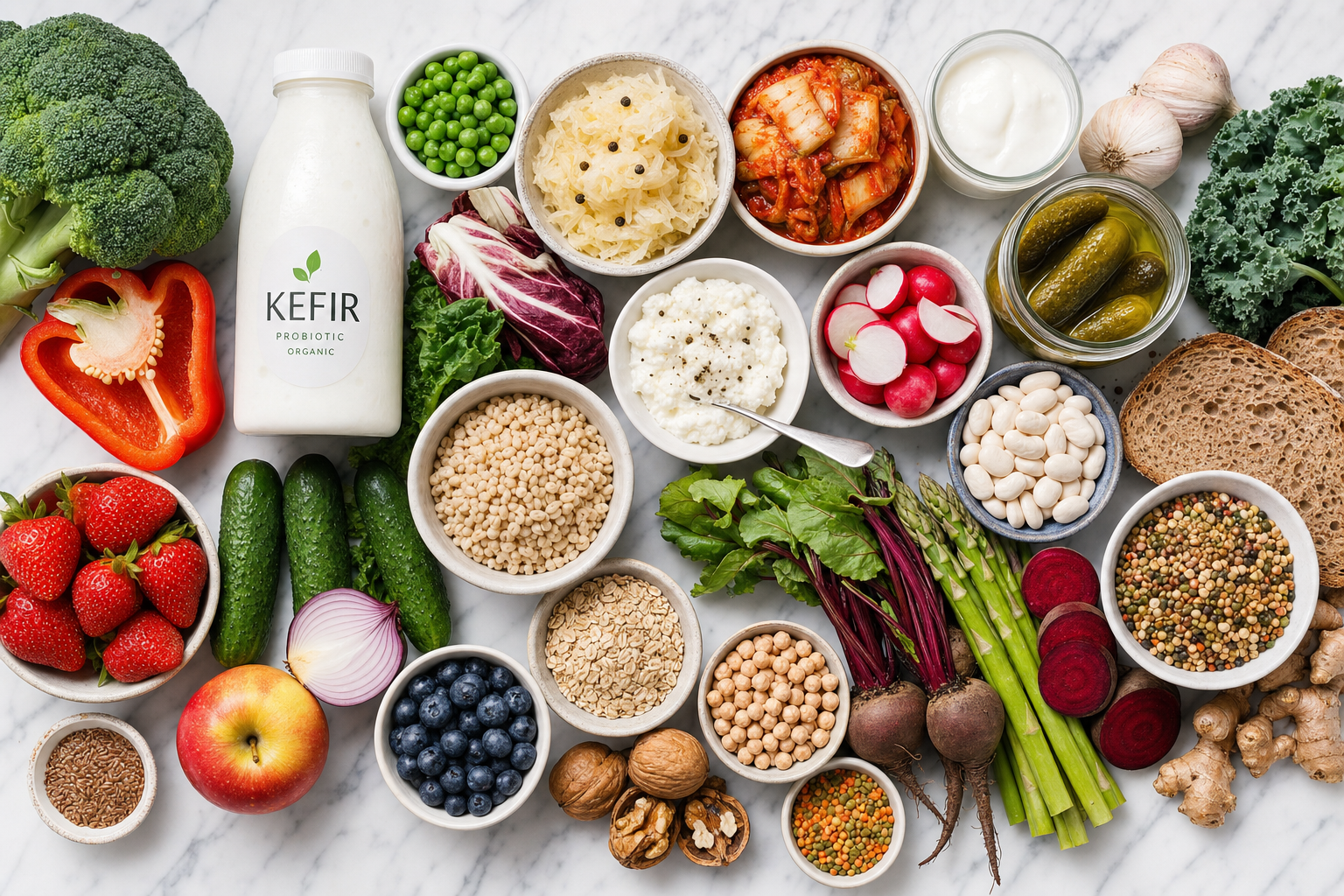
Dietary fibre is the primary fuel for gut bacteria. The diversity of fibre sources matters as much as the quantity — different bacteria ferment different fibres, so eating a wider variety of plant foods supports greater microbial diversity. Practical targets: vegetables of multiple types, legumes (lentils, chickpeas, beans), whole grains (oats, barley, rye), nuts, seeds, and fruit. The research on “plant diversity” is increasingly clear — people who regularly eat 30 or more different plant foods per week show consistently better gut microbiome profiles. For more on specific fibre types, see our guide to dietary fiber.
Include Fermented Foods
Fermented foods — yogurt with live cultures, kefir, kimchi, sauerkraut, miso, and kombucha — provide live bacteria that can temporarily populate the gut and modulate its environment. A 2021 Stanford trial found that a high-fermented-food diet increased microbiome diversity and reduced inflammatory markers more than a high-fibre diet alone. Tolerance varies — people with IBS or SIBO may not tolerate high-fermented-food intake well initially.
Stay Physically Active
Exercise consistently shows up in microbiome research as beneficial, independent of diet. Regular aerobic exercise in particular is associated with higher abundance of butyrate-producing bacteria. Our home workout plan is a practical starting point for those building exercise habits.
Review Medications With Your Doctor
PPIs (proton pump inhibitors used for reflux) significantly alter the gut microbiome. Long-term PPI use is associated with higher risk of C. difficile infection and changes in upper GI bacteria. Antibiotics should be used only when genuinely needed — each course disrupts the gut microbiome, and recovery can take months.
Probiotics: Targeted, Not General
Probiotic supplements don’t rebuild a depleted microbiome — probiotics are transient and don’t permanently colonise. But specific strains do have evidence for specific benefits relevant to aging. Broad “gut health” probiotics without specific strain information are largely marketing. See our guide on probiotics vs prebiotics vs synbiotics for how to choose effectively.
Frequently Asked Questions
Does your gut microbiome change as you age?
Yes, significantly. After 60, microbial diversity tends to decline, beneficial bacteria that produce butyrate decrease, and more opportunistic bacteria become relatively more abundant. These changes are associated with increased inflammation, weakened immune function, and gut barrier changes — but lifestyle factors strongly influence the trajectory.
What is the best diet for gut health in older adults?
A varied, plant-forward diet high in fermentable fibre from diverse sources — vegetables, legumes, whole grains, nuts, and fruit — combined with regular fermented foods like yogurt, kefir, and kimchi. Dietary diversity (aiming for 30+ different plant foods per week) appears to matter more than any single “superfood.”
Can probiotics help an aging gut?
For specific purposes yes — antibiotic-associated diarrhoea, constipation, and some immune support. For general microbiome rebuilding, dietary fibre and fermented foods are more effective. Probiotics are transient and don’t permanently colonise the gut.
How does aging affect digestion?
Multiple aspects of digestion change with age: stomach acid production decreases, gut motility slows (increasing constipation risk), enzyme production can decline, and the gut barrier becomes more permeable. These changes mean that nutrient absorption efficiency decreases with age.
Is constipation normal with aging?
It becomes more common — slowed gut motility, reduced physical activity, decreased fluid intake, and medication side effects all contribute. Adequate fibre (25–35g/day), plenty of water, regular movement, and reviewing medications that cause constipation are the first steps. Our constipation relief guide covers practical approaches in detail.
The Bottom Line
The aging gut microbiome changes in predictable ways — lower diversity, fewer butyrate producers, more inflammation. But these changes are significantly modifiable through diet, exercise, sleep, and thoughtful medication management. The most impactful single change for most older adults is increasing the diversity and quantity of plant foods in the diet — this feeds beneficial bacteria more effectively than any supplement. Fermented foods add further benefit. The gut doesn’t have to age as fast as the calendar.
Related: Hydration and Longevity: How Water Intake Shapes Energy, Skin, and Aging

 James Hargreaves
 Emma Thornton

 Sarah Mitchell