 James Hargreaves
What Collagen Does in the Body
Collagen is the most abundant protein in the human body — making up approximately 30% of total protein mass. It is the primary structural protein in skin, tendons, ligaments, cartilage, bones, blood vessels, and the gut lining. Collagen provides tensile strength, elasticity, and structural support to virtually every tissue in the body. The body produces collagen naturally, but production declines progressively from around age 25 — contributing to the skin changes, joint stiffness, and reduced wound healing commonly associated with ageing. For a broader supplement overview, see our complete supplement guide.
Collagen Benefits
Collagen for Skin Health
The most marketed benefit of collagen supplementation is improved skin quality — and the evidence here is stronger than for many beauty supplements. Multiple randomised controlled trials have found that hydrolysed collagen peptides (10g daily) improve skin elasticity, hydration, and reduce the appearance of wrinkles over 8–12 weeks of consistent use. The mechanism: when collagen peptides are absorbed in the gut, they accumulate in skin tissue and stimulate fibroblasts (skin cells responsible for collagen production) to increase their output. It is essentially a signalling effect rather than simple “top-up” of skin collagen. Vitamin C is required as a cofactor for collagen synthesis — taking collagen with vitamin C may enhance its effects.
Collagen for Joints and Bones
Cartilage is approximately 60% collagen. As collagen declines with age (and following intense exercise), cartilage integrity reduces, contributing to joint pain and stiffness. Multiple clinical trials have found that hydrolysed collagen supplementation reduces joint pain in both osteoarthritis patients and active athletes, with benefits typically appearing after 3–6 months of consistent use. For bone health, collagen provides the matrix onto which calcium and other minerals are deposited — meaning adequate collagen is important for bone strength beyond just calcium and vitamin D intake. See our guide to best supplements for health for context on joint and bone support strategies.
Types of Collagen Supplements
Hydrolyzed Collagen Peptides
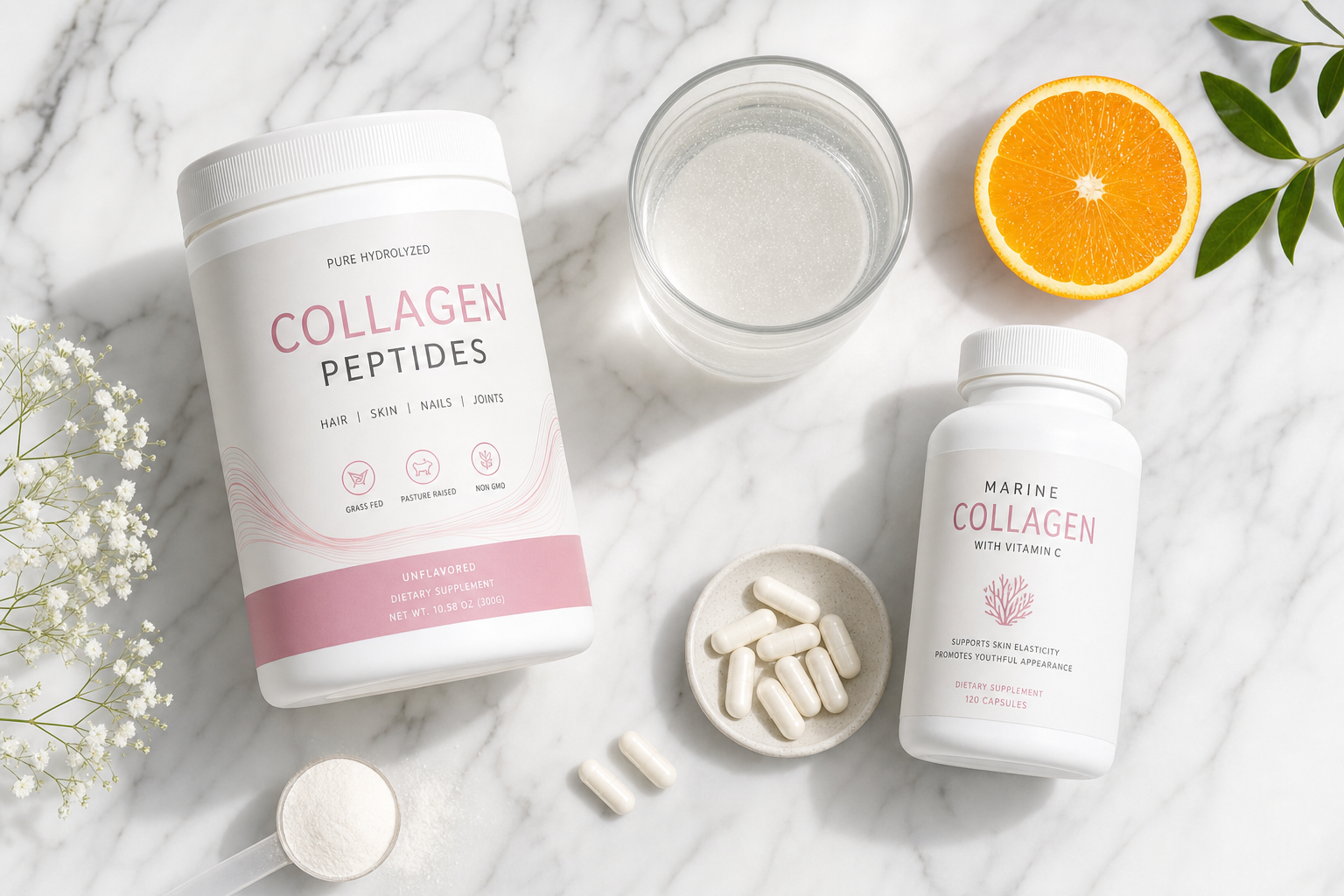
Hydrolysed collagen (also called collagen peptides or collagen hydrolysate) is collagen that has been broken down into smaller peptide fragments through enzymatic processing. This makes it water-soluble, easily mixed into drinks and foods, and more bioavailable than intact collagen. Hydrolysed collagen peptides are the form used in the majority of clinical research and should be the default choice for supplementation.
Marine vs Bovine Collagen
Marine collagen (from fish skin and scales) is primarily Type I collagen — the form most abundant in human skin. It has excellent bioavailability and is a good choice for skin-focused supplementation. Bovine collagen (from cow hides) provides both Type I and Type III collagen — relevant for skin, joints, and gut health. Both are effective; the choice depends on dietary preferences (marine is suitable for pescatarians but not vegans or strict vegetarians) and specific goals. There is currently no well-evidenced vegan collagen supplement — plant-based collagen “boosters” contain precursors (vitamin C, amino acids) rather than actual collagen.
Collagen with Vitamin C
Vitamin C is an essential cofactor for the enzymes (prolyl hydroxylase and lysyl hydroxylase) that stabilise the collagen triple helix structure. Without adequate vitamin C, collagen cannot be properly synthesised — this is the mechanism behind scurvy. Taking collagen alongside vitamin C (either as a combined supplement or from food sources) is the most evidence-informed approach to collagen supplementation.
How to Take Collagen
Standard doses in clinical trials: 10g hydrolysed collagen peptides daily for skin benefits; 5–15g for joint health. Collagen is best taken dissolved in a drink with a vitamin C source — orange juice, a squeeze of lemon, or a vitamin C supplement. Morning or post-workout timing is common, though timing appears less important than daily consistency. Benefits typically require 8–12 weeks to become apparent — collagen works slowly as new structural proteins take time to be synthesised and incorporated into tissues.
Safety and Quality Considerations
Collagen supplements are generally well-tolerated with a good safety profile. As animal-derived products, they are not suitable for vegans. Quality varies significantly between products — look for products with clearly stated hydrolysed collagen peptide content (not just “collagen”), third-party testing, and specific collagen types listed. Some products contain very low doses (1–2g) dressed up in impressive marketing — verify that the dose matches what clinical research has used (10g+ for skin; 5–15g for joints).
FAQ
What are the benefits of collagen supplements?
Improved skin elasticity and hydration, reduced wrinkle appearance, joint pain reduction, and support for bone and connective tissue health — with evidence strongest for skin and joint outcomes.
Do collagen supplements work for skin?
Yes — multiple RCTs show that 10g of hydrolysed collagen daily improves skin elasticity, hydration, and reduces wrinkle depth over 8–12 weeks. The evidence is stronger than for most beauty supplements.
Can collagen help joint pain?
Yes — both osteoarthritis patients and active athletes show reduced joint pain after 3–6 months of consistent hydrolysed collagen supplementation in clinical trials.
Which collagen type is best?
Type I for skin (found in marine and bovine collagen); Type II for joint cartilage (found in undenatured chicken collagen products); Types I and III for general connective tissue (bovine collagen).
How long does collagen take to work?
Skin benefits typically appear after 8–12 weeks. Joint benefits may take 3–6 months. Consistency is essential — collagen works through gradual tissue remodelling, not immediate effect.


 Dr. Rachel Stone

 Dr. Maya Chen
 Daniel Brooks