 Emma Thornton
Fast answer: Aim for two servings of fatty fish per week and build in plant sources like flax, chia, and walnuts. Food-first omega-3s may support heart and brain health; supplements can help in specific cases when used safely.
In this guide: EPA/DHA vs ALA, how much fish to eat, safer supplement tips, mercury & sustainability, a 7-day plan, and FAQs.
Omega-3 basics (EPA, DHA, ALA)
Omega-3s come in three main types:
-
EPA and DHA — found mainly in fish and seafood.
-
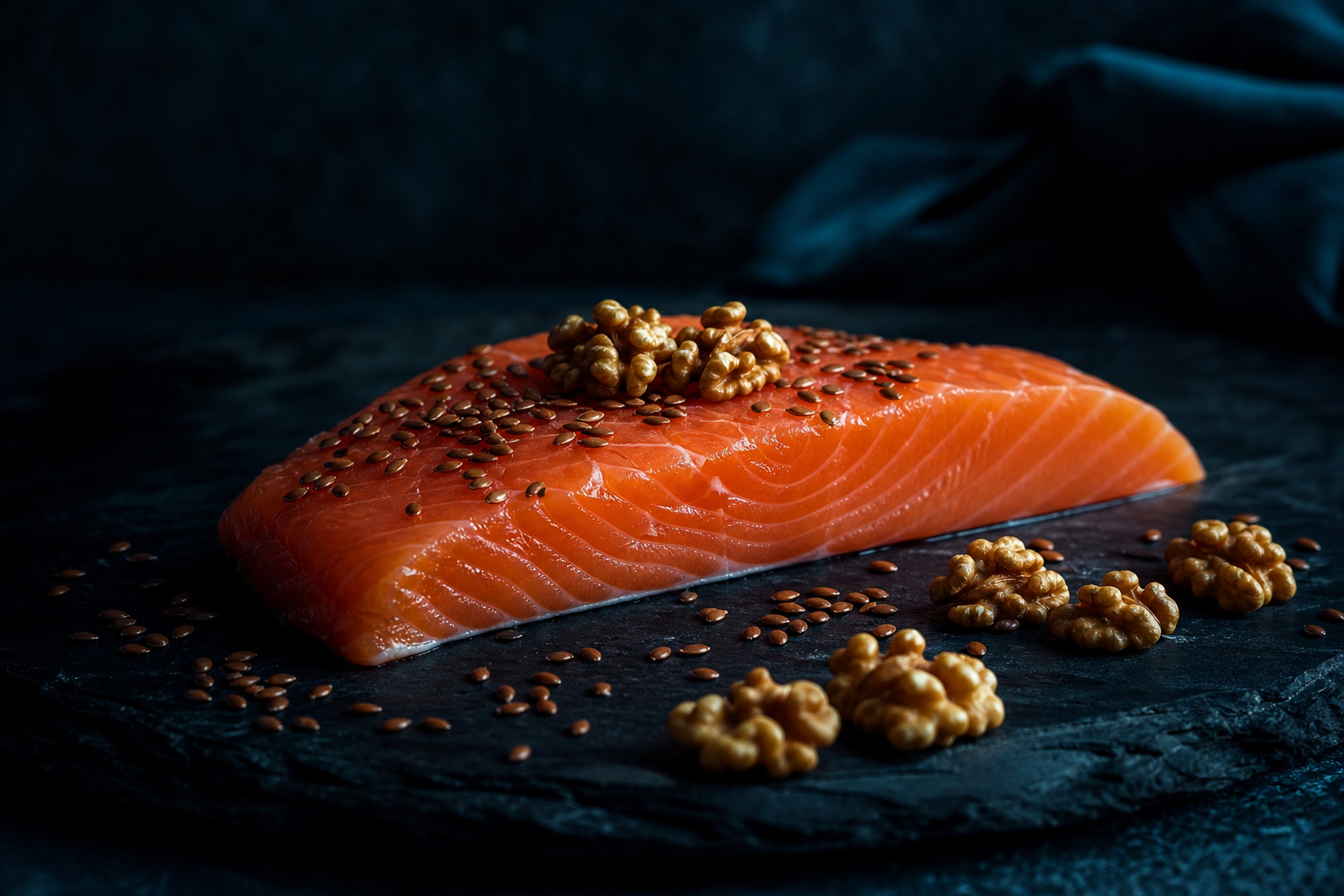
ALA — found in plants (flaxseed, chia, walnuts, canola/soy oils).
Your body converts only a small amount of ALA into EPA/DHA. If you include seafood, it helps to get some EPA/DHA directly. If you don’t eat fish, see the algae oil note below.

How much fish should I eat?
A practical target for most adults is 2 servings of seafood per week, especially oily fish like salmon, sardines, trout, herring, and mackerel. One serving is about 3 oz cooked (~¾ cup flaked).
Lower-mercury “Best Choices” (great for weekly rotation): salmon, sardines, trout, anchovies, pollock, cod, tilapia, shrimp, crab, scallops, oysters, mussels.
Limit/avoid high-mercury fish (especially in pregnancy/for children): shark, swordfish, king mackerel, tilefish (Gulf of Mexico), bigeye tuna.
Simple ways to hit two servings
-
Can of sardines on whole-grain toast with lemon.
-
Roasted salmon with quinoa and broccoli.
-
Trout with potatoes and green beans.
-
Shrimp stir-fry with mixed veg and brown rice.
Mayo Clinic Minute: quick primer on fish oil/omega-3s and who may benefit.
Food-first sources (quick list + easy add-ins)
Seafood with EPA/DHA: salmon, sardines, Atlantic mackerel, herring, trout, anchovies.
Other seafood: tuna (prefer light/skipjack more often), mussels, oysters.
Plant ALA sources: ground flaxseed, chia, walnuts, canola/soy oil; edamame and kidney beans add smaller amounts.
Everyday add-ins
-
Stir 1 Tbsp ground flax or chia into oats or yogurt.
-
Use canola/soy oil for cooking and olive oil for finishing.
-
Keep canned salmon/sardines for fast lunches.

Supplements: when to consider & how to choose (safely)
Food first. Consider a supplement if you rarely eat fish or your clinician recommends it.
Typical amounts (general guidance):
-
Many adults do fine with ~250–500 mg EPA + DHA/day from diet plus, if needed, supplements.
-
Higher doses (2–4 g/day) may be used to lower high triglycerides—only under medical supervision.
Choosing a quality product
-
Look for third-party testing (USP, NSF, IFOS).
-
Check the label for EPA + DHA per serving (not just “fish oil”).
-
Forms include triglyceride, phospholipid (krill/algae), and ethyl ester; any can work—take with a meal for better absorption.
-
Freshness/storage: keep caps tightly closed, away from heat/light; refrigerate once opened. A strong “fishy” odor can mean oxidation.
-
Interactions: talk to your clinician if you take blood thinners/anti-platelet meds, have a bleeding disorder, or have surgery scheduled. Pregnant/breastfeeding? Ask about algae-based EPA/DHA.
Sustainability & safety (quick guide)
-
Prefer smaller oily fish (sardines, anchovies, mackerel) and responsibly farmed salmon/trout.
-
Look for eco-labels like MSC, ASC, or Best Aquaculture Practices where available.
-
Cooking: bake, roast, steam, or poach. Deep-frying increases oils you don’t need and can reduce omega-3 content.
-
For pregnancy/children, follow the FDA/EPA “Best Choices/Good Choices” chart and keep variety across the month.
7-Day omega-3 plan (simple & flexible)
Rule: Build each meal with protein + fiber + healthy fats.
First Day —
• Lunch: salmon bowl (quinoa, greens, yogurt-dill).
• Dinner: bean chili + avocado.
Second Day —
• Breakfast: oats + chia + berries.
• Dinner: trout + potatoes + green beans.
Third Day —
• Lunch: sardine-and-white-bean toast + tomatoes.
• Snack: walnuts + apple.
Fourth Day —
• Dinner: shrimp stir-fry + brown rice.
Fifth Day —
• Breakfast: smoothie (kefir, flax, berries).
• Dinner: mackerel tacos + cabbage slaw.
Sixth Day —
• Lunch: tuna (light/skipjack) salad on whole-grain + greens.
Seven Day —
• Dinner: roasted salmon + farro + broccoli.
FAQs about omega-3 fatty acids
Do plant omega-3s (ALA) replace fish?
ALA helps, but your body converts only a little to EPA/DHA. If you don’t eat fish, ask your clinician about algae-based EPA/DHA.
How much fish oil should I take?
It depends on your diet and health goals. Start with food, then review amounts with your clinician. For high triglycerides, prescription-strength doses are used under care.
Which fish are lower in mercury?
Salmon, sardines, trout, pollock, anchovies, cod, shrimp, crab, and scallops are common Best Choices. Limit high-mercury fish listed above.
Is canned tuna okay?
Yes—choose light/skipjack more often. Limit albacore (white) during pregnancy and for young children per FDA/EPA advice.
Fish oil vs krill oil vs algae oil—what’s best?
All can provide EPA/DHA. Pick what you tolerate, third-party tested, and within your budget. Algae oil is a fish-free option.
What’s the Omega-3 Index?
It’s a blood test showing EPA+DHA in red blood cells. Some clinicians use it to track intake; it’s optional for most people.
Any storage tips?
Keep fish oil cool and sealed. Use ground flax/chia soon after opening; store in a cool, dark place.
Conclusion
Omega-3s are easy when you keep it food-first: fish twice a week plus ALA-rich plants. Use supplements if needed—safely and with guidance. Rotate low-mercury seafood, cook simply, and enjoy balanced meals.
Do this today: Add canned sardines or salmon to your cart, and sprinkle ground flax on tomorrow’s breakfast.

 James Hargreaves
 Sarah Mitchell
 Daniel Brooks