 Dr. Rachel Stone
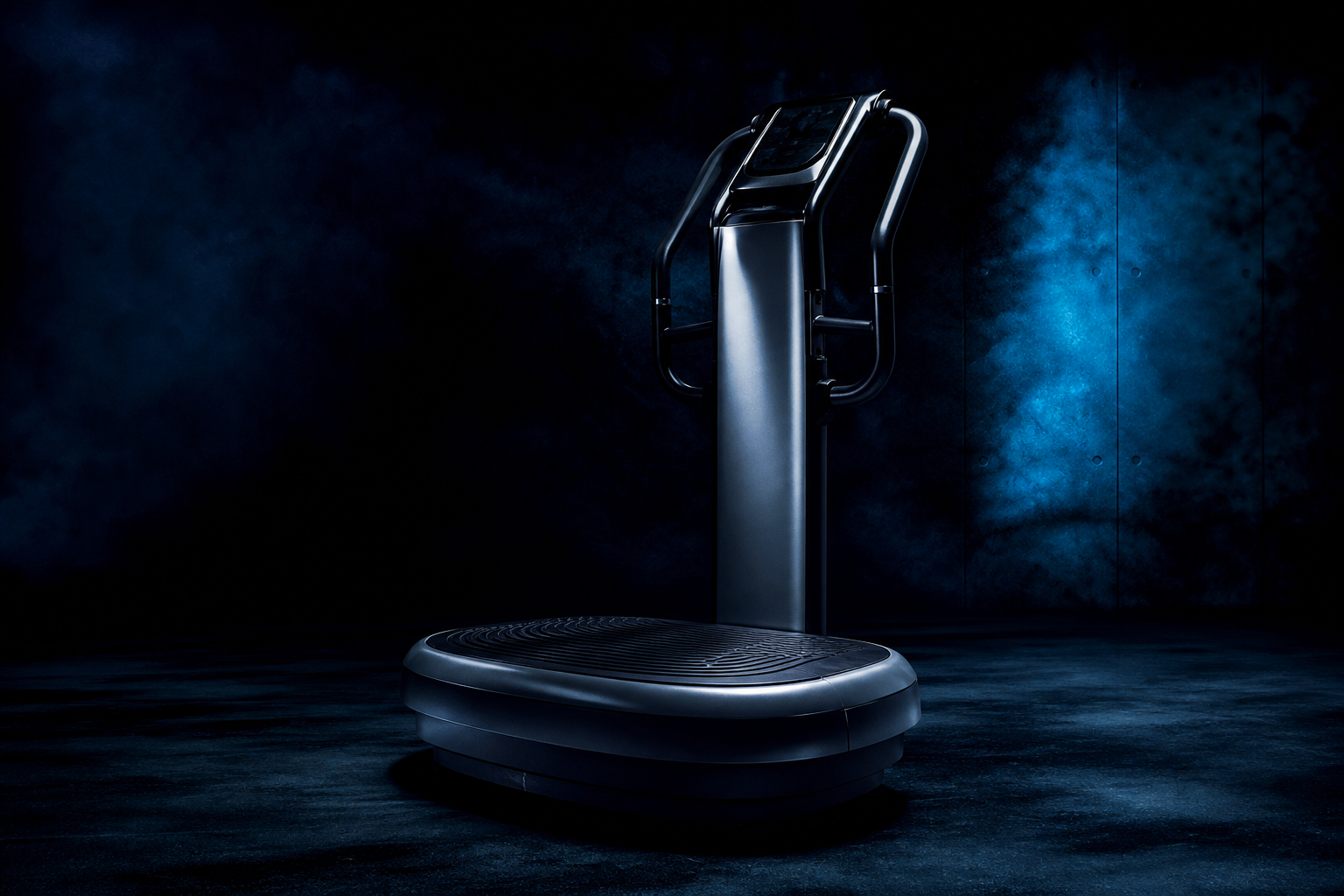
Vibration plates — platforms that vibrate at specific frequencies while you stand, sit, or exercise on them — have moved from physiotherapy clinics into gyms and homes worldwide. The 2025–2026 evidence is more nuanced than both enthusiastic marketing and dismissive scepticism suggest: vibration plates genuinely benefit certain populations for specific goals, but they are not a passive fat-loss device or bone-density solution as often claimed.
How Do Vibration Plates Work?
Whole-body vibration (WBV) platforms transmit mechanical vibrations through the body at frequencies typically between 15–60 Hz with amplitudes of 1–10mm. This rapid vibration causes involuntary muscle contractions as the body’s proprioceptive system responds to the unstable surface — similar to the reflex contraction that occurs when a doctor taps your knee. These repeated involuntary contractions are proposed to stimulate muscle fibres, improve neuromuscular coordination, and create mechanical stress on bones. Two main types exist: pivotal/oscillating platforms (seesaw motion) and lineal platforms (vertical vibration) — with different evidence profiles for different outcomes.
Vibration Plate Benefits
1. Muscle Strength, Balance, and Physical Function — Strongest Evidence
This is where vibration plates have the most consistent clinical evidence. Multiple systematic reviews and meta-analyses confirm WBV improves muscle strength, balance, proprioception, and physical function — particularly in older adults and people with limited exercise capacity. A 2025 PMC review (PMC12591996) confirmed significant improvements in these outcomes. Mayo Clinic notes WBV may improve strength and balance. For older adults who cannot perform traditional resistance training, vibration plates offer a meaningful low-impact alternative. These benefits make vibration plates particularly valuable for fall prevention and rehabilitation settings.
2. Cardiovascular Benefits
A 2025 systematic review and meta-analysis (Tandfonline) found long-term WBV significantly improved arterial stiffness measures and blood pressure markers — meaningful cardiovascular benefits. This is a newer finding that adds an additional rationale for vibration plate use beyond just musculoskeletal outcomes. Improved arterial compliance and blood pressure are clinically relevant, particularly for people with metabolic risk factors who have limited exercise capacity.
3. Weight Loss — Modest and Context-Dependent
The 2026 evidence here is sobering for vibration plate marketing claims. A 2026 meta-analysis of 20 randomised trials (PubMed 40847071) found no significant overall reduction in body mass, BMI, fat mass, or body-fat percentage from WBV alone. Adults aged 50+ showed a modest body-fat-percentage decrease in subgroup analysis, but this was not replicated across all populations. Some 2025 studies still report fat mass reductions when WBV is combined with calorie control or other exercise, but as a standalone passive fat loss tool, the evidence does not support the marketing claims. Mayo Clinic is explicit: WBV should be viewed as a supplement to, not replacement for, diet and regular exercise for weight loss.
4. Bone Density — Mixed Evidence
Vibration plates are widely marketed for bone health and osteoporosis prevention. The evidence is mixed. Some reviews report WBV may help reduce bone loss or increase bone mineral density in postmenopausal or older adults. Others — including a 2025 Consumer Reports review — note little to no effect compared to placebo or other controls. The mechanical stress from vibration does theoretically stimulate osteoblasts (bone-building cells), but the clinical magnitude of benefit is far smaller than weight-bearing exercise like walking or resistance training. For bone health, WBV may be a useful adjunct for people who cannot perform weight-bearing exercise, but it should not replace established bone-protective strategies.
5. Circulation, Flexibility, and Recovery
Mayo Clinic notes possible improvements in flexibility, blood flow, and post-exercise soreness with WBV. Increased local blood flow during vibration is well-established. Some research shows reduced DOMS (delayed onset muscle soreness) after vibration exposure. These benefits are real but modest — the same outcomes are achievable through stretching, massage, or light aerobic activity.
Who Benefits Most From Vibration Plates?
- Older adults (60+): Best evidence — balance, strength, fall prevention, and physical function improvements are most consistent in this population
- Rehabilitation patients: People recovering from injury, stroke, or surgery who cannot perform conventional exercise
- People with limited mobility: WBV provides some musculoskeletal stimulus when traditional exercise is not possible
- People at risk for osteoporosis: As an adjunct to (not replacement for) weight-bearing exercise and medical management
- Healthy active people: Evidence is weaker — benefits that WBV provides are largely achieved more effectively through conventional exercise
How to Use a Vibration Plate Effectively
- Frequency: 25–40 Hz is the most studied range for muscle and balance benefits; lower frequencies (5–12 Hz) are used for relaxation
- Duration: 10–20 minutes per session; most studies use 3 sessions per week
- Position: Standing with knees slightly bent; performing exercises (squats, calf raises) during vibration amplifies benefits
- Don’t just stand still: Active exercise during vibration produces better outcomes than passive standing
- Contraindications: Pregnancy, recent joint replacement, pacemaker, acute thrombosis, epilepsy, severe osteoporosis (fracture risk) — consult a doctor before use
Frequently Asked Questions
Yes — but for specific outcomes and populations. Vibration plates have good evidence for improving muscle strength, balance, and physical function in older adults, and a 2025 meta-analysis confirms cardiovascular benefits including improved arterial stiffness. They do not produce significant weight loss as a standalone intervention (2026 meta-analysis of 20 trials). They are best used as a supplement to conventional exercise rather than a replacement, particularly for people with limited mobility or exercise capacity.
Not significantly on their own. A 2026 meta-analysis of 20 randomised controlled trials found no significant reduction in body mass, BMI, or fat mass from whole-body vibration alone. Adults over 50 showed a modest body-fat-percentage decrease in one subgroup. Vibration plates combined with diet and exercise may support weight loss efforts, but the plate itself is not a passive fat-loss device as marketing often implies.
Most clinical studies use 10–20 minute sessions, 3 times per week. Daily use is generally considered safe, but more is not necessarily better — most evidence is for 3x weekly protocols. Active exercise during vibration (squats, lunges, calf raises) produces better outcomes than passive standing. Start with shorter sessions (5–10 minutes) at lower intensity if you are new to WBV and build gradually.
This article is for informational purposes only. Consult a healthcare provider before using a vibration plate if you have cardiovascular disease, joint replacements, epilepsy, or are pregnant.


 James Holloway


 Dr. Maya Chen