 Sarah Mitchell
Why Protein Supplements Matter
Protein is the most important macronutrient for muscle repair, growth, immune function, enzyme production, hormone synthesis, and satiety. While whole food protein sources (meat, fish, eggs, dairy, legumes) are always preferable, protein supplements provide a convenient, concentrated, and rapidly absorbed source of amino acids that is particularly valuable around training, when dietary intake is insufficient, or when whole food protein isn’t practical. This guide covers everything you need to know to choose and use protein supplements effectively. For a broader supplement context, see our complete guide to supplements.
Protein Supplement Benefits
Protein supplements support muscle protein synthesis (MPS) — the process by which muscle is built and repaired. Leucine, one of the three branched-chain amino acids (BCAAs), is the primary trigger for MPS — and the leucine content of a protein source is a key determinant of its anabolic potency. Protein supplements also support weight management through their satiety effect (protein is the most filling macronutrient per calorie), preserve muscle mass during caloric restriction, support immune function through immunoglobulin production, and provide a practical way to meet protein targets for people with high needs (athletes, older adults, vegans).
Who Needs Protein Supplements?
People who consistently struggle to meet protein needs through food. Current evidence supports a protein intake of 1.6–2.2g per kilogram of body weight daily for optimal muscle maintenance and growth in active individuals. For a 75kg person, this means 120–165g of protein daily — a target that many people don’t reach through food alone, particularly those who are busy, travel frequently, or don’t eat much meat or fish. Older adults (who need higher protein intakes to prevent sarcopenia), athletes in heavy training, and vegans (who face a larger challenge meeting leucine thresholds from plant sources) are the populations most likely to benefit from protein supplementation.
Whey Protein vs Casein Protein
Whey and casein are both derived from cow’s milk — they are separated during the cheese-making process. Whey (approximately 20% of milk protein) is fast-digesting: it peaks in the blood within 60–90 minutes, making it ideal immediately after training to drive acute muscle protein synthesis. It is the leucine-richest common protein source. Casein (approximately 80% of milk protein) digests slowly over 5–7 hours, providing a sustained amino acid supply — making it ideal before bed to support overnight muscle protein synthesis (MPS remains elevated during sleep when adequate amino acids are present). For most practical purposes, whey concentrate or isolate before and around training, and casein (or cottage cheese) before bed, is a well-evidenced protocol for maximising muscle recovery.
Plant-Based Protein Powders
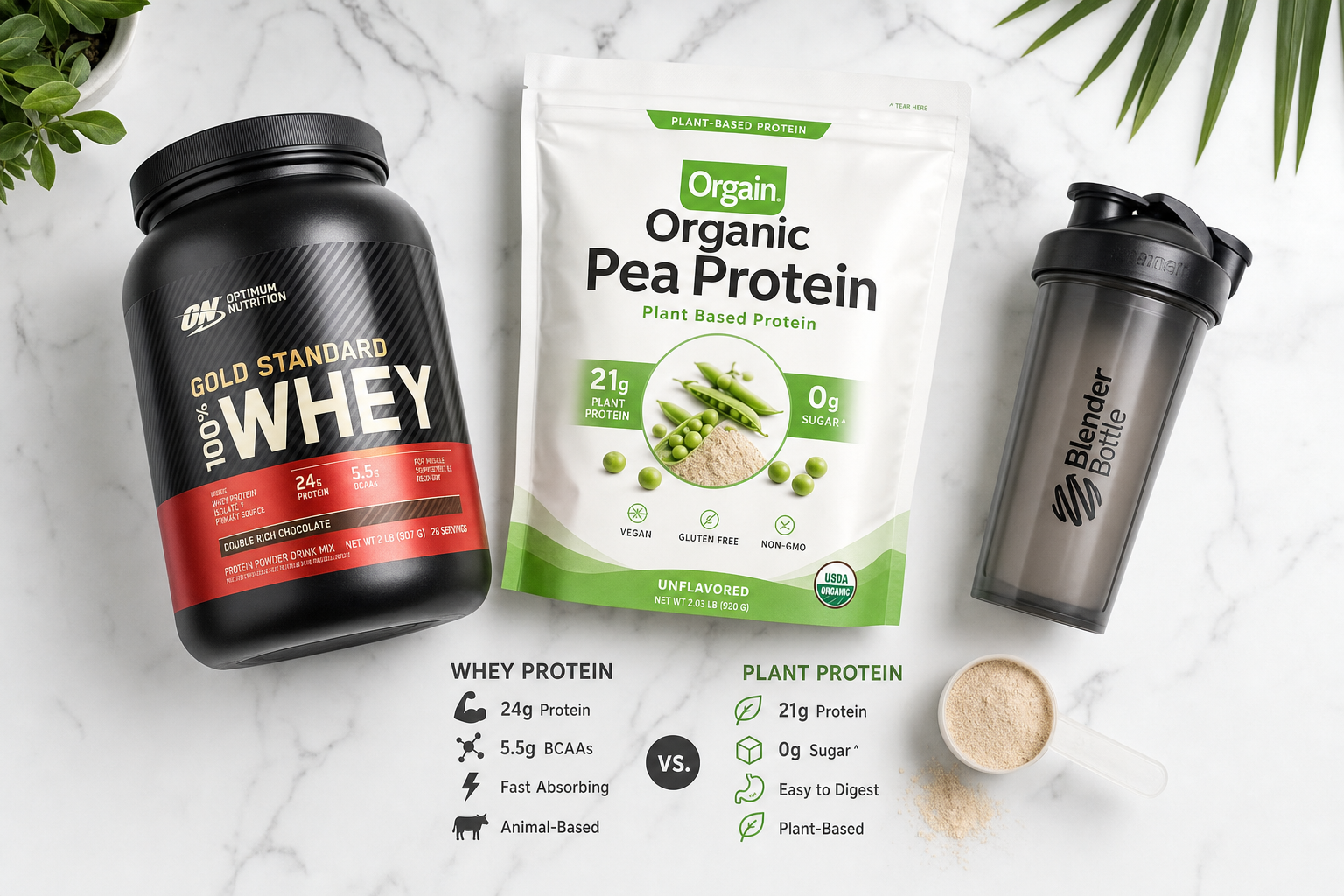
Plant proteins have historically been considered inferior to whey due to lower leucine content and incomplete amino acid profiles in many individual sources. However, modern plant protein formulations have largely closed this gap. Pea protein has a good amino acid profile and leucine content, is well-tolerated, and is the most evidence-supported plant protein for muscle building. Rice protein is highly digestible but low in lysine. Soy protein is complete and well-studied, but concerns about phytoestrogens (largely unfounded at normal supplement doses) deter some users. Combining pea and rice protein provides a complete, high-leucine profile comparable to whey. At equivalent leucine doses, plant proteins match whey for muscle protein synthesis in clinical trials.
How Much Protein Do You Need?
General population (sedentary adults): 0.8g/kg/day (the minimum to prevent deficiency — not optimal for health). Active adults and recreational exercisers: 1.2–1.6g/kg/day. Resistance training athletes: 1.6–2.2g/kg/day. Older adults (65+): 1.2–1.6g/kg/day (higher needs to counteract anabolic resistance). Protein in caloric restriction: up to 2.4g/kg/day to preserve muscle mass. Per-meal distribution matters — 25–40g of protein per meal maximally stimulates muscle protein synthesis; spreading protein across 3–4 meals is more effective than consuming most protein in one or two meals.
Best Time to Take Protein
Post-workout (within 2 hours): whey protein or a fast-digesting protein source. Pre-bed: casein protein, cottage cheese, or Greek yogurt. Between meals: any protein source to maintain amino acid availability and satiety. The “anabolic window” immediately post-workout is real but wider than once believed — protein consumed within 2 hours of training provides the most benefit, but total daily protein intake matters more than precise timing.
How to Choose a Protein Powder
Check total protein per serving (not per 100g), leucine content (ideally 2–3g per serving for whey; higher doses for plant proteins), ingredients list (minimal unnecessary additives), third-party testing certification (particularly important for athletes subject to drug testing — look for Informed Sport or NSF Certified for Sport), and form: whey concentrate (economical, contains some lactose), whey isolate (higher protein percentage, low lactose — better for lactose-sensitive individuals), or hydrolysed whey (pre-digested, fastest absorbing, most expensive, minimal benefit over isolate for most people).
FAQ
What is the best protein supplement?
Whey protein (concentrate or isolate) is the gold standard for muscle building and recovery due to its high leucine content and rapid absorption. Pea protein (or pea + rice blend) is the best plant-based alternative.
Is whey protein better than plant protein?
At matched leucine doses, they produce similar muscle protein synthesis responses. Whey is more convenient due to its naturally complete amino acid profile and higher leucine density. Plant proteins require slightly higher doses or blending to match.
Can protein powder help with weight loss?
Yes — protein is the most satiating macronutrient per calorie. High protein intake during caloric restriction preserves muscle mass, supports greater fat loss, and reduces hunger. Protein shakes are a convenient way to increase protein without excess calories.
How much protein should I take after a workout?
25–40g of a fast-digesting protein (whey or similar) within 2 hours post-training optimally stimulates muscle protein synthesis.
Are protein supplements safe?
Yes — protein supplements are among the safest and most studied supplements available. Concerns about kidney damage from high protein intake apply only to people with pre-existing kidney disease, not healthy individuals.

 Sarah Mitchell
 Dr. Rachel Stone
 Dr. Maya Chen
 James Hargreaves