 Daniel Brooks
Why Vitamin D Matters
Vitamin D is unique among vitamins — it functions more like a hormone than a traditional vitamin, with receptors in virtually every cell in the body. It regulates calcium absorption, bone mineralisation, immune function, muscle strength, mood, insulin sensitivity, and cardiovascular health. Despite its critical importance, vitamin D deficiency is one of the most prevalent nutritional deficiencies worldwide — affecting an estimated 40–50% of adults in Western countries. For a foundational understanding of the supplement landscape, see our complete guide to supplements.
Vitamin D Benefits for Bones
Vitamin D’s most established function is enabling calcium absorption in the small intestine. Without adequate vitamin D, only 10–15% of dietary calcium is absorbed — compared to 30–40% with sufficient vitamin D. This makes vitamin D the gatekeeper of bone mineralisation. Severe vitamin D deficiency causes rickets in children (soft, malformed bones) and osteomalacia in adults (softening of existing bone). Sub-optimal levels — far more common than frank deficiency — contribute to accelerated bone density loss, particularly in post-menopausal women and older adults. Vitamin D supplementation in deficient older adults reduces fracture risk by approximately 15–30% in randomised trials.
Vitamin D and Immune Health
Vitamin D receptors are expressed on virtually all immune cells — T-cells, B-cells, macrophages, and dendritic cells — and vitamin D actively modulates both innate and adaptive immune responses. Deficiency is associated with increased susceptibility to respiratory infections, autoimmune conditions (multiple sclerosis, rheumatoid arthritis, type 1 diabetes), and inflammatory diseases. Multiple meta-analyses have found that vitamin D supplementation reduces the risk of acute respiratory tract infection — an effect most pronounced in those who are deficient. The seasonal pattern of influenza and respiratory illness correlates closely with seasonal vitamin D levels in population studies.
Vitamin D and Mood
The correlation between low vitamin D and depression is one of the most consistently replicated findings in nutritional psychiatry. Vitamin D receptors are expressed in brain regions involved in mood regulation, and vitamin D influences the synthesis of serotonin and dopamine. Low vitamin D is particularly associated with seasonal affective disorder (SAD) — the mood dip that occurs in winter months when sunlight (and therefore vitamin D synthesis) is minimal. Supplementation studies in vitamin D-deficient depressed individuals show significant mood improvement — though the effect is less consistent in people who are not deficient.
Signs and Symptoms of Vitamin D Deficiency
Early Symptoms
Fatigue, muscle weakness, bone and joint aches, frequent infections, low mood, and brain fog are the most common early manifestations. These symptoms are non-specific and easily attributed to other causes — which is why deficiency goes unrecognised for so long in so many people.
Advanced Deficiency
More severe or prolonged deficiency produces pronounced muscle weakness (difficulty climbing stairs, rising from a chair), diffuse bone pain (particularly in the spine, pelvis, and legs), stress fractures, and significantly impaired immune function. In older adults, severe deficiency dramatically increases fall and fracture risk.
Who Is at Risk for Low Vitamin D?
People with limited sun exposure (indoor occupations, high latitudes above 35°N or below 35°S, covering skin for cultural or religious reasons). Darker skin tones (melanin reduces UV-B penetration, reducing cutaneous vitamin D synthesis). Older adults (skin becomes less efficient at synthesising vitamin D with age, and older adults typically spend less time outdoors). Obese individuals (vitamin D is sequestered in fat tissue, reducing bioavailability). People with fat malabsorption conditions (Crohn’s disease, coeliac disease, cystic fibrosis). Exclusively breastfed infants (breast milk contains minimal vitamin D).
Food Sources of Vitamin D
Very few foods contain meaningful amounts of vitamin D naturally. Fatty fish (salmon, mackerel, sardines, herring) are the richest food sources — a 100g serving of salmon provides approximately 600–1,000 IU. Egg yolks provide a modest amount (~40 IU each). Fortified foods (milk, orange juice, breakfast cereals) contribute in countries with fortification programmes. Food alone is rarely sufficient to maintain adequate vitamin D status for most people in northern latitudes.
Vitamin D2 vs Vitamin D3
Vitamin D3 (cholecalciferol) is the form produced naturally by the skin and found in animal-based foods. Vitamin D2 (ergocalciferol) is produced by plants and fungi (including UV-exposed mushrooms). Research consistently shows that vitamin D3 raises and maintains blood levels more effectively than D2 — it is the preferred supplemental form for most people. Vegan vitamin D3 (sourced from lichen) is now widely available for those avoiding animal-derived products.
How to Take Vitamin D Supplements
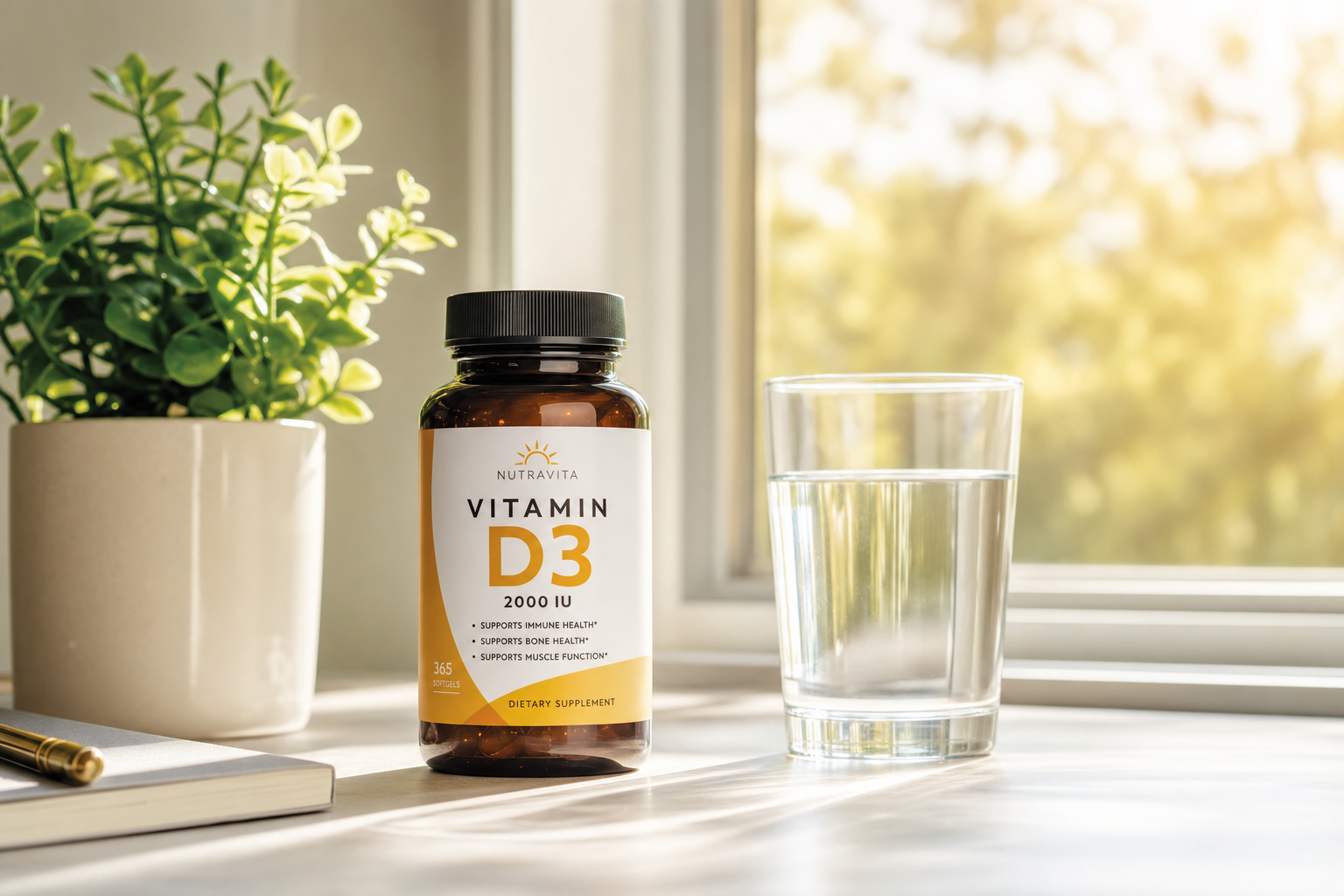
Vitamin D is fat-soluble — take it with a meal containing dietary fat for optimal absorption. Daily supplementation is more effective at maintaining blood levels than weekly mega-doses. General population recommendation: 1,000–2,000 IU (25–50 mcg) daily for adults. Those with confirmed deficiency may need 4,000 IU daily initially under medical supervision. Optimal blood level: 75–125 nmol/L (30–50 ng/mL). Testing (25-OH vitamin D blood test) before and after supplementation is the most reliable approach — available through GPs or private blood testing services. Vitamin D works synergistically with vitamin K2 (which directs calcium into bones and away from arteries) and magnesium (which activates vitamin D).
FAQ
What are the benefits of vitamin D?
Bone health (calcium absorption and mineralisation), immune function, mood regulation, muscle strength, insulin sensitivity, and cardiovascular health are the best-evidenced benefits.
How do I know if I’m vitamin D deficient?
A blood test measuring 25-hydroxyvitamin D is the definitive test. Levels below 50 nmol/L are generally considered deficient; 50–75 nmol/L is insufficient for optimal health in most guidelines.
What causes vitamin D deficiency?
Insufficient sun exposure is the primary cause. Risk is amplified by dark skin, high latitude, indoor lifestyle, obesity, age, and fat malabsorption conditions.
Should I take vitamin D2 or D3?
Vitamin D3 is more effective at raising and maintaining blood levels and is the preferred form for most people. Vegan D3 (lichen-derived) is available for those avoiding animal products.
Can you take too much vitamin D?
Yes — vitamin D toxicity (hypervitaminosis D) causes hypercalcaemia (elevated blood calcium) with symptoms including nausea, vomiting, weakness, and kidney damage. Toxicity is rare below 10,000 IU daily but supplementing without testing is inadvisable above 4,000 IU daily long-term.


 James Hargreaves
 Dr. Maya Chen
 Dr. Rachel Stone
 Daniel Brooks
 Ashley