 James Hargreaves
What Men Need from Supplements
Men’s nutritional needs differ from women’s in meaningful ways — higher muscle mass creates greater demand for protein and creatine, higher cardiovascular risk makes omega-3 and magnesium particularly relevant, and specific hormonal priorities (testosterone support, prostate health) shape which supplements are most valuable. The foundation is always a nutrient-rich whole food diet — but for many men, strategic supplementation fills gaps that diet alone leaves. For a foundational overview of the supplement landscape, see our complete guide to supplements.
Best Supplements for Men’s Energy
Persistent fatigue in men is often driven by three addressable deficiencies: vitamin D, magnesium, and B12. Vitamin D deficiency — extremely common in men who work indoors — suppresses testosterone, reduces muscle function, and causes fatigue. Magnesium is required for ATP production (cellular energy) and is depleted by stress, exercise, and poor diet. B12 is essential for red blood cell production and neurological function; deficiency causes profound fatigue and cognitive slowing. Beyond correcting deficiencies, creatine monohydrate — one of the most evidence-supported performance supplements — increases phosphocreatine stores in muscle, improving high-intensity exercise output and reducing fatigue. See our dedicated guide to best supplements for energy.
Best Supplements for Muscle Growth and Recovery
Creatine Monohydrate
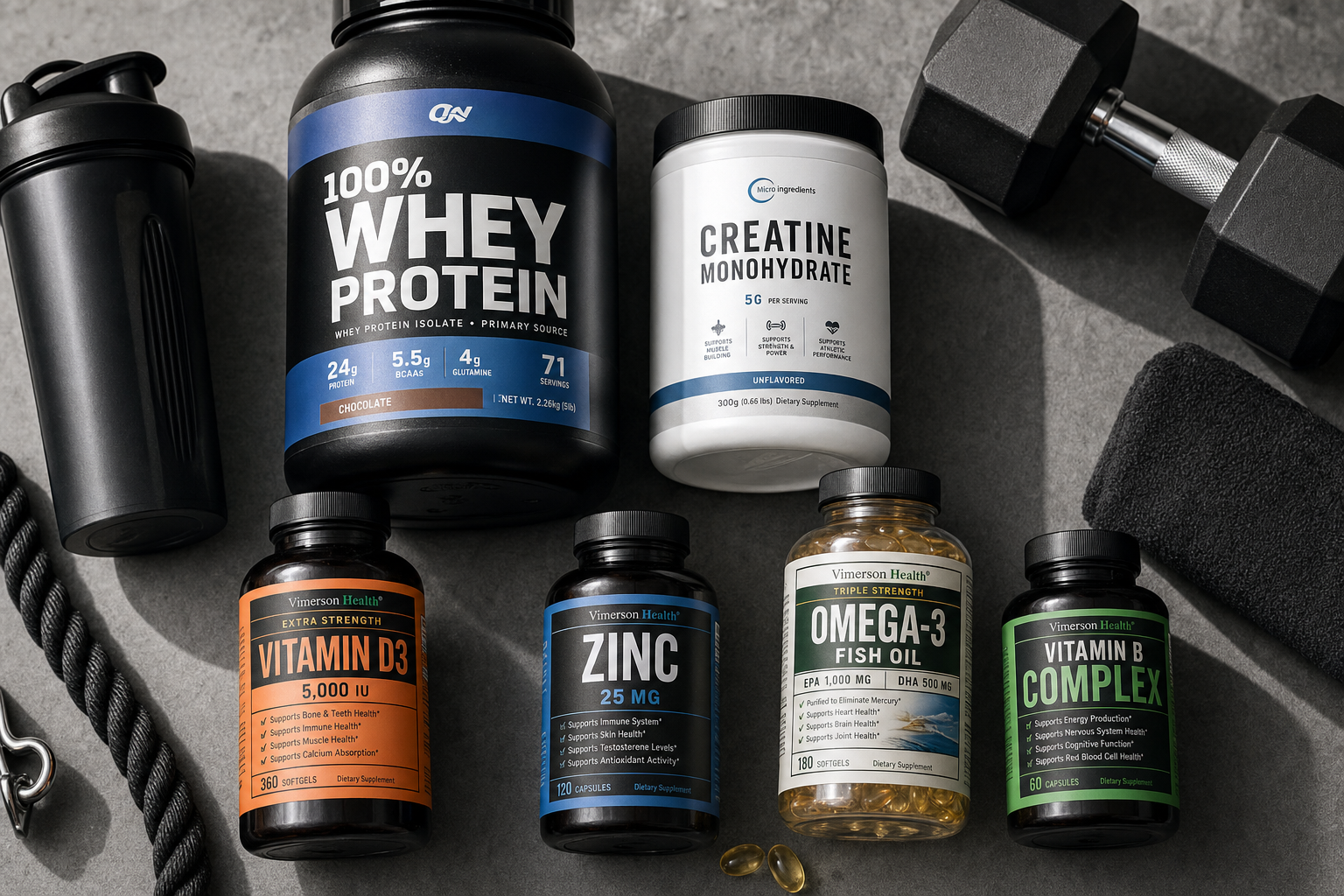
Creatine is the most evidence-supported performance supplement available. It increases phosphocreatine stores in muscle, enabling greater output during high-intensity exercise (sprints, heavy lifting), supporting greater training volume, and accelerating recovery between sets. The effect on lean muscle mass over a training programme is consistent and meaningful — 1–2kg of additional lean mass in 8–12 weeks of resistance training compared to placebo. Dose: 3–5g daily. No loading phase necessary. See our full guide to creatine benefits and uses.
Protein Supplements
If dietary protein intake consistently falls below 1.6g per kilogram of body weight, a protein supplement bridges the gap. Whey protein is the gold standard for post-training recovery due to its rapid absorption and high leucine content — the amino acid most responsible for stimulating muscle protein synthesis. Plant-based alternatives (pea, rice, soy) are effective when combined to provide a complete amino acid profile. See our complete protein supplements guide.
Best Supplements for Heart Health
Men have significantly higher cardiovascular disease risk than women of the same age, making heart-supportive supplements particularly relevant. Omega-3 fatty acids (EPA and DHA from fish oil) are the best-evidenced supplement for cardiovascular health — reducing triglycerides, lowering inflammation, and modestly reducing blood pressure and arrhythmia risk. Dose: 2–3g of combined EPA+DHA daily for triglyceride-lowering effects. Magnesium also supports healthy blood pressure and cardiac rhythm. See our full guide to omega-3 fish oil benefits.
Best Supplements for Prostate Health
Zinc is concentrated in the prostate and plays a role in prostate tissue regulation. Zinc deficiency is associated with increased prostate cancer risk in some studies. Saw palmetto is the most commonly marketed prostate supplement — evidence for its efficacy in benign prostatic hyperplasia (BPH) is mixed, with some trials showing modest improvement in urinary symptoms and others showing no benefit. Lycopene (from tomatoes) has more consistent evidence for prostate health and is best obtained from food (cooked tomato products) rather than supplements. Vitamin D deficiency has been associated with increased prostate cancer risk in observational studies.
Best Vitamins and Minerals for Men
Vitamin D
The most important single supplement for most men. Vitamin D deficiency is associated with low testosterone, reduced muscle function, impaired immune function, depression, and increased cardiovascular risk. Most men in northern latitudes and/or indoor occupations are deficient. Target blood level: 75–125 nmol/L. Typical effective supplement dose: 1,000–2,000 IU daily with food. See our full guide to vitamin D benefits and deficiency.
Magnesium
Magnesium is involved in over 300 enzymatic reactions including testosterone production, muscle contraction, sleep quality, and stress response. The majority of men don’t meet the recommended 400–420mg daily intake from diet. Magnesium glycinate is the most bioavailable and sleep-supportive form. See our guide to magnesium benefits and types.
Zinc
Zinc is essential for testosterone production, immune function, wound healing, and prostate health. Male athletes are at particular risk of zinc deficiency due to losses through sweat. Zinc picolinate or gluconate are the most bioavailable forms. Dose: 15–25mg daily. Do not exceed 40mg daily long-term as high zinc impairs copper absorption. See our guide to zinc benefits and uses.
How Age Changes Men’s Supplement Needs
In their 20s–30s, men benefit most from creatine, protein, vitamin D, magnesium, and omega-3 for performance and long-term health foundation. In their 40s–50s, testosterone naturally declines — vitamin D, zinc, and magnesium become even more important as cofactors for testosterone synthesis. CoQ10 becomes worth considering as mitochondrial function naturally declines and statin use becomes more common (statins deplete CoQ10). In their 60s+, B12 absorption decreases, creatine becomes more valuable for preserving muscle mass and cognitive function, and vitamin D and calcium for bone health take higher priority.
How to Choose the Right Supplement Stack
Start with the fundamentals before adding specialised supplements: vitamin D (if not getting adequate sun), omega-3 (if not eating oily fish regularly), magnesium (most people are insufficient), and creatine (if training). Add zinc if diet is low in red meat and shellfish or if training heavily. Add a quality protein supplement only if hitting daily protein targets through food is consistently difficult. Avoid complex “mens health” blends — they typically contain under-dosed ingredients at inflated prices. Buy individual high-quality, third-party tested supplements instead.
FAQ
What supplements should men take daily?
Vitamin D (if deficient or limited sun exposure), omega-3 fish oil, magnesium glycinate, and creatine monohydrate form the most evidence-supported foundation for most men.
Are multivitamins useful for men?
Men’s multivitamins can address multiple gaps simultaneously but often contain suboptimal forms and doses. They’re a reasonable starting point but typically inferior to targeted individual supplements based on identified needs.
What supplements help men’s energy?
Addressing vitamin D, magnesium, and B12 deficiencies resolves the most common nutritional causes of fatigue. Creatine improves exercise energy. Ashwagandha can help with stress-related fatigue.
Is zinc good for men?
Yes — zinc is essential for testosterone production, immune function, prostate health, and wound healing. Many men, particularly athletes, don’t get adequate zinc from diet.
What supplements help muscle recovery?
Creatine monohydrate, adequate protein (1.6–2.2g/kg), magnesium, and vitamin D are the most evidence-supported supplements for muscle recovery and growth.
Related: Hydration and Longevity: How Water Shapes Energy, Skin, and Aging


 Dr. Rachel Stone
 Elena Voss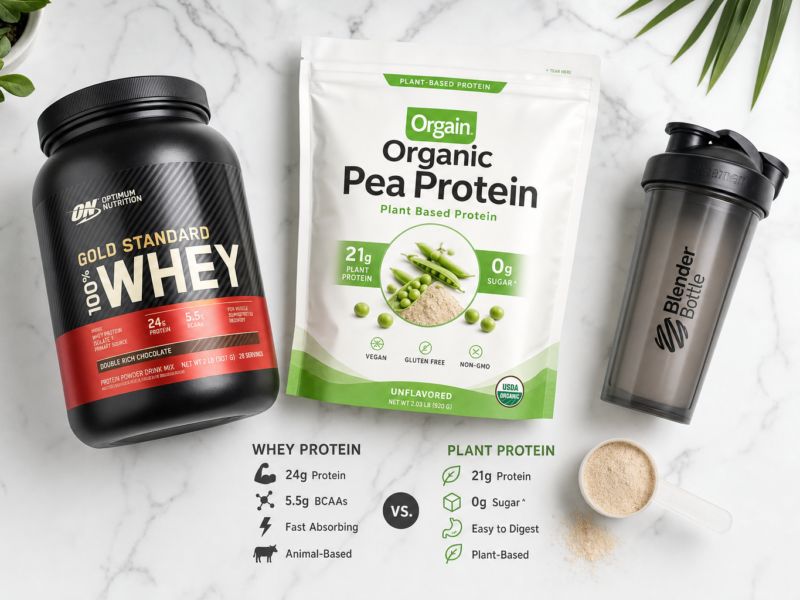
 Sarah Mitchell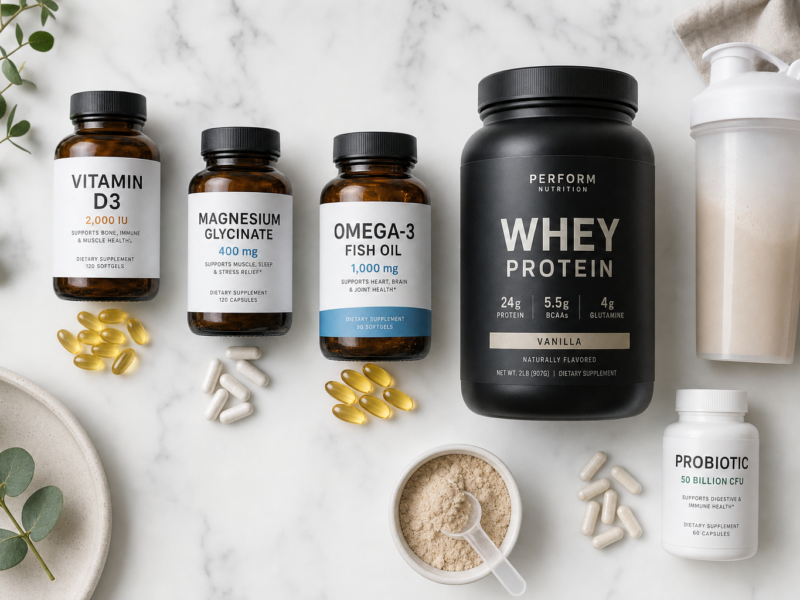

 Rachel Summers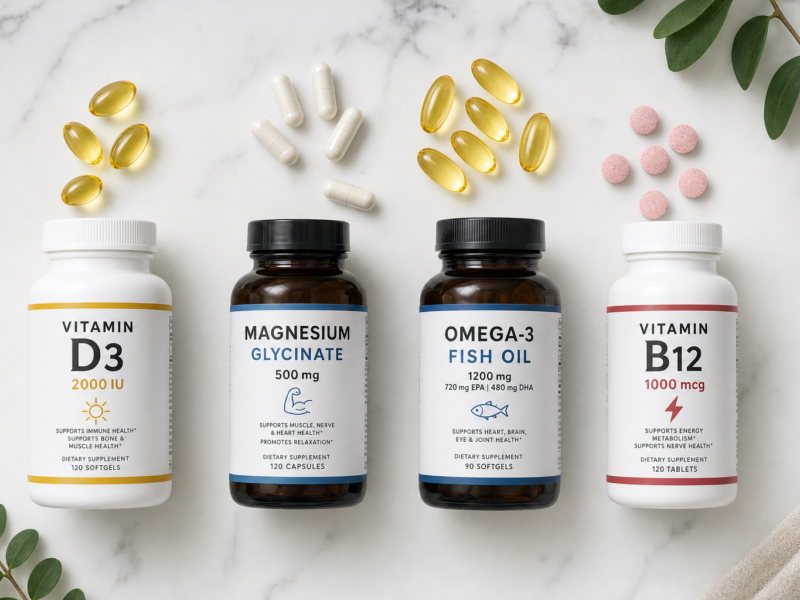
 James Hargreaves