 Emma Thornton
Wondering how much protein per day you need? Most adults do fine aiming for 0.8–1.2 g per kg of body weight. Spread protein across the day and build meals from food-first sources.
In this guide: how much you may need, best sources (animal + plant), a 7-day high-protein meal map, FAQs, and quick videos.
How much protein per day do you need?
How much protein per day for older adults and active people?
-
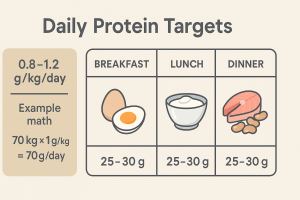
General target: ~0.8 g/kg/day meets basic needs for healthy adults.
-
Older adults & active people: ~1.0–1.2 g/kg/day, and up to 1.2–2.0 g/kg/day for regular training, under professional guidance.
-
Per meal: aim for 20–30 g (some may benefit from ~30–40 g at one meal), and include protein at 3 meals.
Quick math: weight (kg) × target (g/kg). If you track in pounds, divide by 2.2 first.
A fast way to estimate how much protein per day: weight (kg) × 1.0 for a simple starting target.
Best protein sources (animal + plant)
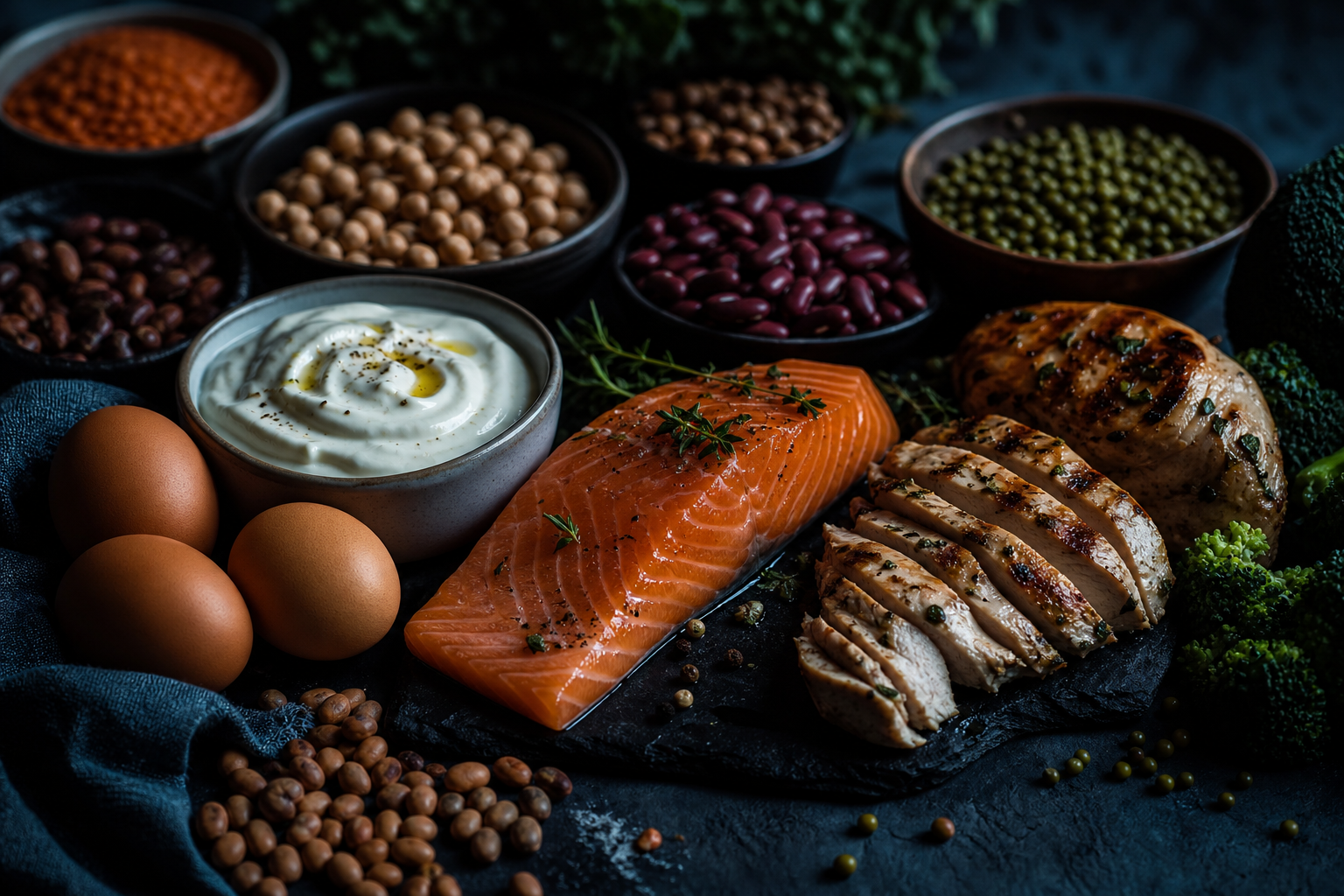
Animal: eggs, fish/seafood, poultry, dairy (Greek yogurt, cottage cheese), lean meats.
Plant: beans, lentils, tofu, tempeh, edamame, peas, nuts & seeds, whole grains.
Mix sources through the week. Keep highly processed meats occasional; choose grilled/roasted over fried. Pair protein with fiber (vegetables, beans, whole grains) for fullness.
Mayo Clinic Health System: short primer on getting enough—but not too much—protein (under 20 min)
7-Day high-protein meal map (simple & flexible)
Rules of thumb:
-
Build each meal with protein + fiber + healthy fats.
-
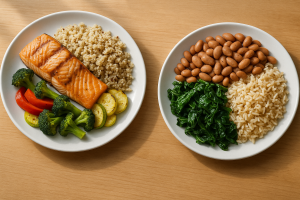
Most meals below give ~25–35 g protein; adjust portions to fit your needs.
Day 1 —
Breakfast: Greek yogurt (¾–1 cup) + berries + chia.
Lunch: Chicken/bean burrito bowl (brown rice, salsa, veg).
Dinner: Salmon + quinoa + broccoli.
Day 2 —
Breakfast: Eggs (2–3) + whole-grain toast + tomatoes.
Lunch: Lentil soup + side salad + whole-grain crackers.
Dinner: Tofu stir-fry with mixed veg + soba noodles.
Day 3 —
Breakfast: Cottage cheese + pineapple + almonds.
Lunch: Tuna + white-bean salad on greens.
Dinner: Turkey chili + avocado.
Day 4 —
Breakfast: Overnight oats + whey/soy scoop (optional) + cinnamon.
Lunch: Hummus, roast chicken & veggie wrap.
Dinner: Shrimp + farro + green beans.
Day 5 —
Breakfast: Smoothie (yogurt or tofu, berries, flax).
Lunch: Black-bean quinoa bowl + feta.
Dinner: Lean beef or tempeh tacos + slaw.
Day 6 —
Breakfast: Avocado toast + 2 eggs.
Lunch: Chickpea pasta with marinara + side salad.
Dinner: Baked cod + potatoes + asparagus.
Day 7 —
Breakfast: Oat-banana pancakes (oat flour) + peanut butter.
Lunch: Leftover chili in whole-grain wrap.
Dinner: Roast chicken thighs or baked tofu + barley + roasted veg.
Need plate balance ideas? See https://healthdigest.blog/time-restricted-eating-2025-trials-safety/
FAQs
Do I need protein powder?
Not necessarily. Food first; powders are optional for convenience.
Will higher protein hurt my kidneys?
Healthy adults usually tolerate moderate-high intakes within ranges above. If you have kidney disease or risk, speak with your clinician before increasing protein.
Can vegetarians/vegans hit targets?
Yes—use beans, lentils, soy (tofu/tempeh/edamame), seitan, nuts/seeds, and whole grains. Combine foods across the day.
Is timing around workouts important?
It helps to eat protein within a few hours before/after training and to hit your daily total.
What’s a simple starting target?
Add ~25–30 g protein at each meal and keep two plant-protein meals every day.
Conclusion
Protein needs aren’t one-size-fits-all. Pick a daily range that fits your body and goals, spread it across meals, and use whole-food proteins most of the time.
Do this today: Multiply your weight (kg) by 1.0 to set how much protein per day to start with, then plan 25–30 g at each meal.
References (high-authority)

 James Hargreaves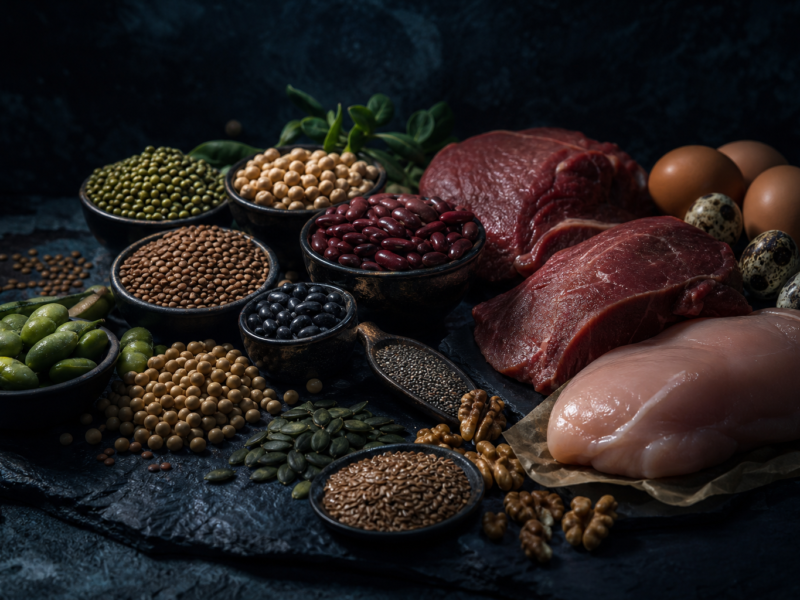

 Rachel Summers
 Sarah Mitchell
 Daniel Brooks