 Dr. Maya Chen
You’ve rendered a beautiful batch of beef tallow — or bought a jar from your butcher — and now it’s sitting on your counter. But how long does it actually last before it goes bad? And is it safe to keep at room temperature or does it need the fridge?
Good news: beef tallow is one of the most shelf-stable cooking fats in existence. Here’s exactly how long it lasts and the best ways to store it.
How Long Does Beef Tallow Last?
| Storage Method | Shelf Life |
|---|---|
| Room temperature (sealed, dark cupboard) | 1–2 months |
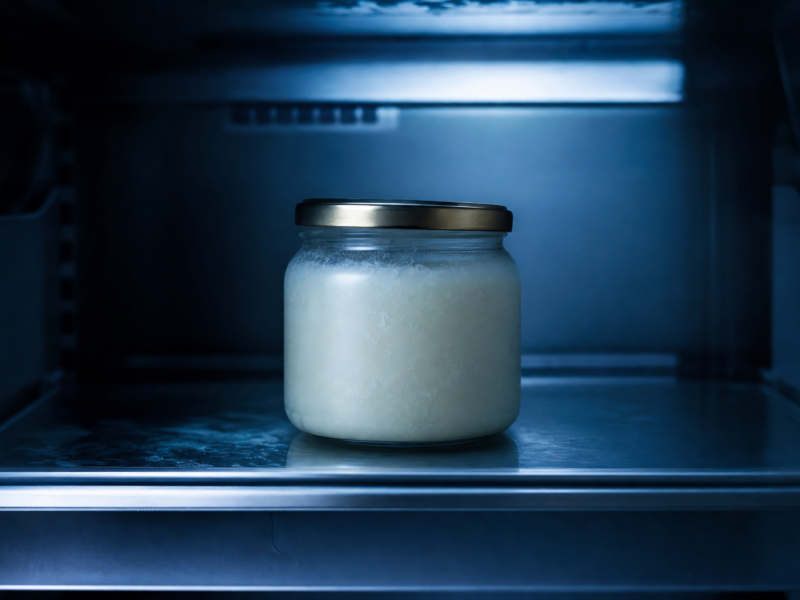
| Refrigerator (sealed container) | 6–12 months |
| Freezer (airtight container) | 1–2 years |
Properly rendered and stored beef tallow lasts significantly longer than most cooking oils. Unlike seed oils that go rancid within weeks at room temperature, tallow’s high saturated fat content makes it remarkably resistant to oxidation — which is exactly what causes fats to go bad.
Why Does Beef Tallow Last So Long?
The answer is chemistry. Fats go rancid through a process called oxidation — when oxygen reacts with the fatty acid chains in the oil, breaking them down and producing the unpleasant smell and flavour of rancid fat.
Polyunsaturated fats (PUFAs) — the dominant fat in seed oils like sunflower, canola, and soybean — have multiple double bonds in their chemical structure, making them highly reactive and vulnerable to oxidation. Saturated fats have no double bonds and are therefore extremely stable.
Beef tallow is roughly 50% saturated fat and 42% monounsaturated fat, with only about 4% polyunsaturated fat. This composition makes it far more shelf-stable than vegetable or seed oils, and closer in stability to traditional preserved fats like lard and ghee.
Does Beef Tallow Need to Be Refrigerated?
Not necessarily — but refrigeration significantly extends its life. Here’s the practical breakdown:
Room Temperature Storage
If your kitchen is consistently cool (below 21°C / 70°F) and you keep the tallow in a sealed, opaque container away from light and heat, it can safely sit on your countertop for 1 to 2 months. This is how tallow was stored for most of human history — before refrigeration existed, rendered animal fats were the primary cooking fat in most cultures.
The key enemies of tallow at room temperature are heat, light, and air. Keep it in a dark cupboard in a sealed glass jar and it will stay fresh for weeks.
Refrigerator Storage
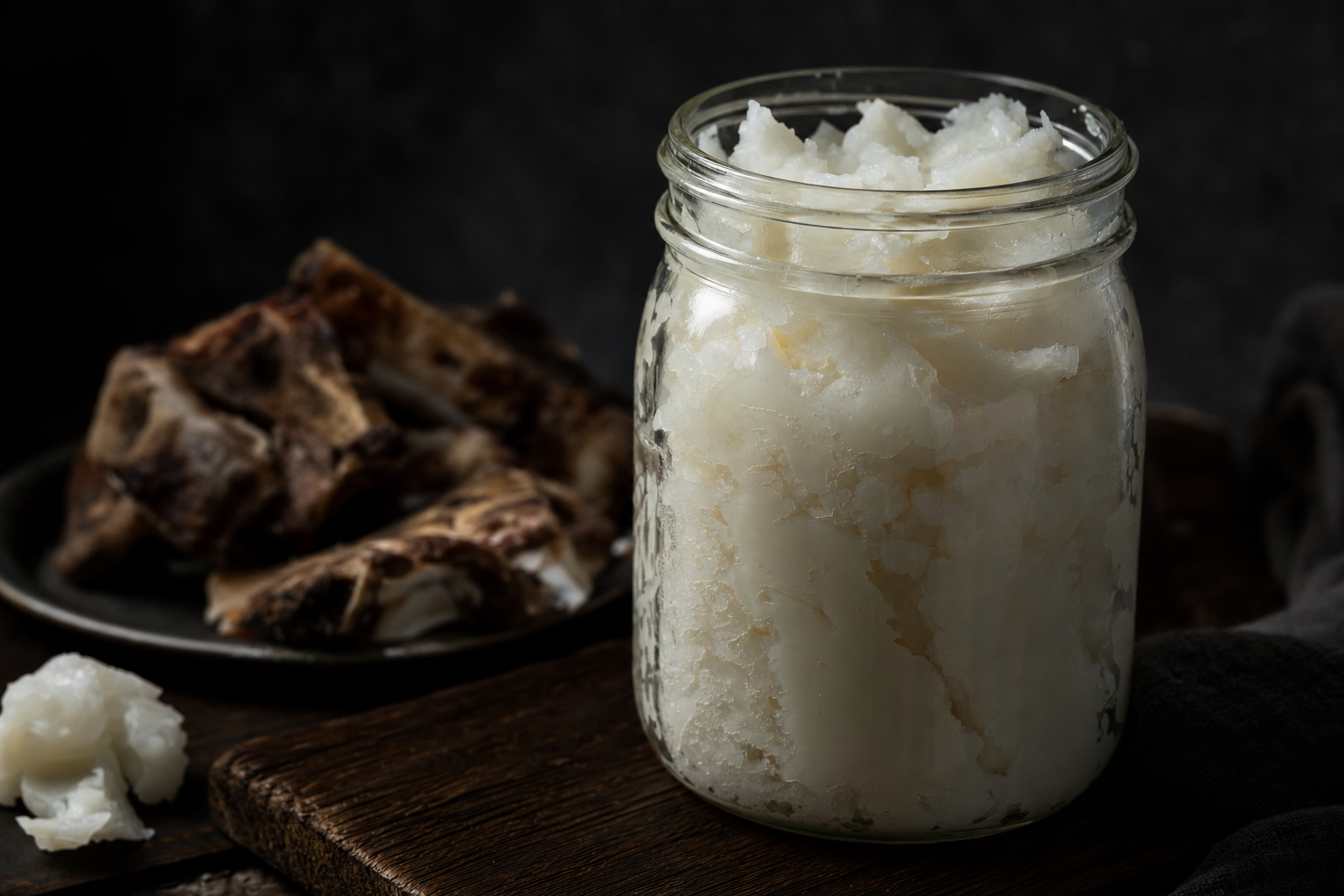
Refrigerated tallow in a sealed container will stay fresh for 6 to 12 months. This is the sweet spot for most home cooks — long enough to use at your own pace, and cold enough to dramatically slow any oxidation. Tallow solidifies in the fridge (it looks like white or pale yellow solid fat), which is completely normal. It softens quickly at room temperature.
Freezer Storage
For long-term storage, the freezer extends tallow’s life to 1 to 2 years. Portion it into ice cube trays or silicone moulds before freezing for easy single-use portions. Frozen tallow thaws quickly in a warm pan and performs exactly the same as fresh.
How to Tell If Beef Tallow Has Gone Bad
Rancid tallow is unmistakable — your nose will know. Signs that your tallow has gone off:
- Smell: A sharp, crayon-like, sour, or paint-like odour. Fresh tallow should smell mild and beefy, or almost neutral.
- Colour: A significant darkening or yellowing beyond the natural pale colour.
- Texture: An unusually sticky, slimy, or gummy texture on the surface.
- Taste: A bitter, acrid, or sharp taste when used in cooking — food cooked in rancid fat will taste unmistakably off.
If your tallow smells off, don’t use it. Consuming rancid fat isn’t acutely toxic, but the oxidation by-products (aldehydes and lipid peroxides) are associated with cellular damage over time.
Best Practices for Storing Beef Tallow
- Use a glass jar with a tight-fitting lid. Glass doesn’t absorb odours and keeps air out better than plastic.
- Keep it dark. Light accelerates oxidation. A dark cupboard or opaque container is ideal.
- Keep it away from heat sources. Don’t store next to your stove or oven.
- Don’t introduce water. Moisture encourages mould growth. Always use a dry spoon.
- Strain it properly. If you rendered your own tallow, make sure to strain out all meat particles — these will spoil much faster than the fat and can accelerate rancidity.
- Label it with the date. Simple but easy to forget — mark when you rendered or opened it.
How Does Tallow Compare to Other Fats?
| Fat | Room Temp Life | Fridge Life | Stability |
|---|---|---|---|
| Beef tallow | 1–2 months | 6–12 months | Very high |
| Lard (pork fat) | 1 month | 6 months | High |
| Ghee (clarified butter) | 3 months | 12 months | Very high |
| Coconut oil | 2 years | Not needed | Extremely high |
| Olive oil (EVOO) | 18–24 months (sealed) | Not needed | High |
| Sunflower oil | 3–6 months | Not needed | Low |
| Canola oil | 1–2 years (sealed) | Not needed | Medium |
Frequently Asked Questions
Properly rendered beef tallow stored in a sealed, airtight container in a cool, dark place will last 1 to 2 months at room temperature. Warmer kitchens or exposure to light will shorten this. When in doubt, refrigerate it.
Yes, beef tallow can go rancid over time, especially if exposed to heat, light, air, or moisture. Signs it has gone bad include a sharp, sour, or crayon-like smell, darkened colour, or an acrid taste when used in cooking.
Absolutely. Beef tallow freezes very well and lasts 1 to 2 years in the freezer with no loss of quality. Portion it into ice cube trays before freezing for easy single-serving use directly from frozen.
If you live in a warm climate or your kitchen gets hot, yes — refrigerate it after opening. In a consistently cool kitchen, a sealed glass jar in a dark cupboard can work for a month or so. Refrigeration is always the safer option for longer storage.
This is completely normal. Beef tallow solidifies at room temperature and becomes very firm when refrigerated, appearing white or pale yellow. It will liquefy again when heated. The solid state is actually ideal for storage as it limits oxygen exposure.
This article is for informational purposes only. Always use your own judgment and sensory assessment when evaluating food safety.
Related reading: Does Beef Tallow Need Refrigeration?.

 Elena Voss