 Sarah Mitchell
Why Strength Training Is the Best “Cheat Code” for Your Fitness
If you could choose just one form of exercise to improve your health, build confidence, and transform your body, beginner strength training would be the answer. Lifting weights isn’t just for bodybuilders or athletes—it’s the foundation of long-term health, functional fitness, and the physique changes most people want.
Strength training builds lean muscle mass, which increases your metabolism and helps you burn more calories even at rest. Additionally, it strengthens your bones, reducing fracture risk as you age. Furthermore, it improves insulin sensitivity, helping prevent type 2 diabetes. Beyond the physical benefits, strength training boosts confidence, reduces anxiety, and gives you tangible proof of progress every single week.
Whether your goal is fat loss, muscle gain, better athletic performance, or simply feeling stronger in daily life, beginner strength training delivers results that cardio alone cannot match. This guide will teach you exactly how to start lifting weights safely, avoid common mistakes, and progress systematically week after week.
Strength Training Basics – What You Need to Know First
Before you touch a weight, let’s clarify what strength training actually is and why it works. Strength training (also called resistance training or weight training) involves using external resistance—whether bodyweight, dumbbells, barbells, or machines—to challenge your muscles beyond their normal demands.
Unlike cardio, which primarily trains your cardiovascular system, strength training forces your muscles to adapt by growing stronger and often larger. This is fundamentally different from “toning,” which is just marketing speak for building muscle while losing fat.
The Principle of Progressive Overload
The secret to getting stronger is progressive overload: gradually increasing the demands on your muscles over time. For example, this might mean adding 5 pounds to your squat, doing one more rep than last week, or completing an extra set. Importantly, without progressive overload, your body has no reason to adapt and grow stronger.
Equally important is recovery. Your muscles don’t grow during the workout—they grow during rest when your body repairs the microscopic damage from training. This is why beginners don’t need to lift every day; in fact, doing so can hinder progress.
Types of Strength Training (Bodyweight, Free Weights, Machines)
Bodyweight training uses your own body as resistance (push-ups, squats, lunges). This is perfect for absolute beginners or home workouts. However, the downside is that progressive overload becomes harder once bodyweight movements feel easy.
Free weights (dumbbells and barbells) offer unlimited progression potential and engage stabilizer muscles that machines miss. On the other hand, they require more coordination and technique to use safely.
Machines provide guided movement paths that are safer for learning patterns and isolating muscles. Consequently, they’re excellent for beginners who feel overwhelmed by free weights. Nevertheless, the tradeoff is less functional carryover to real-world movements.
For most beginners, a combination works best: start with bodyweight and machines to build confidence, then gradually introduce free weights as your technique improves.
How Often Should Beginners Lift?
Start with 2-3 full-body strength sessions per week, with at least one rest day between workouts. This frequency allows adequate recovery while providing enough stimulus for adaptation. Importantly, more is not better when you’re starting out—overtraining leads to burnout, injury, and stalled progress.
A simple schedule might be Monday/Thursday or Monday/Wednesday/Friday. This leaves room for light cardio or mobility work on other days if desired.
Essential Movement Patterns Every Beginner Should Learn
Rather than memorizing dozens of random exercises, focus on mastering these five fundamental movement patterns. Every effective beginner strength training program is built around these patterns because they work multiple muscle groups simultaneously and translate directly to real-life activities.
Squat Pattern
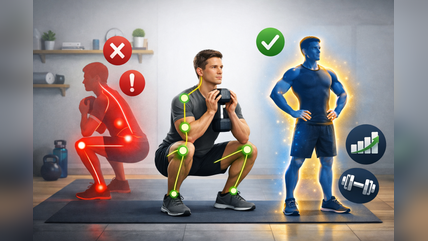
The squat pattern involves lowering your body by bending at the hips and knees simultaneously. This movement trains your quads, glutes, hamstrings, and core.
Beginner squat form basics:
- Start with bodyweight squats: feet shoulder-width apart, toes slightly out
- Initiate by pushing your hips back, then bend your knees
- Keep your chest up and core braced
- Lower until thighs are parallel to the floor (or as low as comfortable)
- Drive through your heels to stand back up
Progression: Once you’ve mastered bodyweight squats with good form, you can advance to goblet squats (holding a dumbbell at your chest) before eventually moving to barbell variations.
Common mistakes: Knees caving inward, heels lifting off the floor, rounding your lower back. Film yourself or work with a trainer initially to catch these issues early.
Hinge Pattern (Hip-Dominant)
The hip hinge teaches you to move at your hips while keeping your spine neutral—essential for picking things up safely and building powerful glutes and hamstrings.
Learning the hip hinge:
- First, stand with feet hip-width apart, slight knee bend
- Next, push your hips straight back while maintaining a flat back
- Then, feel the stretch in your hamstrings
- Finally, drive your hips forward to return to standing
Beginner deadlift variations include the Romanian deadlift with light dumbbells or kettlebells. This pattern is crucial for back protection in daily life—every time you pick up groceries or lift a box, you’re hinging.
Push Pattern (Horizontal & Vertical)
Push movements train your chest, shoulders, and triceps. You have two main directions:
Horizontal push (push-ups, dumbbell bench press): pressing away from your chest. For beginners, start with incline push-ups against a bench or wall, then progress to floor push-ups as you get stronger.
Vertical push (overhead press): pressing weight overhead. This requires good shoulder mobility. Notably, dumbbell shoulder presses allow each arm to move naturally and are safer than barbell versions for beginners.
Form emphasis: Keep your shoulder blades stable and engaged. Avoid excessive arching in your lower back during overhead pressing.
Pull Pattern (Rows & Pull-Downs)
Pull movements balance out pushing exercises and build a strong, healthy back and biceps. Interestingly, most beginners are relatively weak at pulling compared to pushing.
Beginner row exercises:
- Dumbbell single-arm row: place one hand and knee on a bench for support, pull the weight to your hip
- Cable or resistance band rows: focus on pulling your shoulder blade back first, then bending your elbow
- Lat pulldown: an excellent progression toward eventual pull-ups
Key cue: Think “pull with your elbow, not your hand.” This ensures you’re using your back muscles rather than just your arms.
Core and Carry (Bracing & Stability)
Your core stabilizes your spine during all other lifts. Therefore, beginner core exercises should focus on anti-movement rather than crunches.
Essential movements:
- Plank: hold a straight-body position, squeezing your glutes and bracing your abs
- Dead bug: lying on your back, extend opposite arm and leg while keeping your lower back pressed to the floor
- Farmer’s carry: walk while holding heavy weights at your sides, maintaining perfect posture
Learning to brace your core—creating intra-abdominal pressure—protects your spine during squats, deadlifts, and overhead lifts.
How to Warm Up Properly for Strength Training
Never walk into the gym and immediately start lifting heavy weights. A proper strength training warm-up prepares your nervous system, raises muscle temperature, and significantly reduces injury risk.
5–10 Minute General Warm-Up
Start with light movement to elevate your heart rate and increase blood flow:
- 5 minutes of walking, cycling, or rowing at easy pace
- Dynamic stretches: leg swings, arm circles, hip openers
- Mobility drills for problem areas (thoracic rotation, ankle mobility)
Overall, this general warm-up should make you slightly warm but not fatigued.
Specific Warm-Up Sets for Your First Lifts
Before your working sets, perform ramp-up sets with progressively heavier weights:
Example: If your working weight for squats is 135 pounds for 3 sets of 8 reps:
- First, do 45 pounds (empty bar) × 10 reps
- Then, 95 pounds × 5 reps
- Next, 115 pounds × 3 reps
- Finally, working sets: 135 pounds × 8 reps (3 sets)
These specific warm-ups groove the movement pattern and prepare the exact muscles you’re about to challenge.
Beginner Strength Training Workout Plans (At Home & Gym)
Now let’s put theory into practice with concrete workout templates. Choose the plan that matches your schedule and available equipment.
2-Day Full-Body Beginner Routine (Gym or Home)
Perfect for busy beginners, this plan hits all major muscle groups twice per week.
Workout A (Monday):
- Goblet squat: 3 sets × 10 reps
- Dumbbell bench press: 3 sets × 10 reps
- Single-arm dumbbell row: 3 sets × 10 reps per arm
- Plank: 3 sets × 30 seconds
- Farmer’s carry: 3 sets × 40 seconds
Workout B (Thursday):
- Romanian deadlift: 3 sets × 10 reps
- Push-ups (modify as needed): 3 sets × 8-12 reps
- Lat pulldown or band pull-down: 3 sets × 10 reps
- Dumbbell shoulder press: 3 sets × 10 reps
- Dead bug: 3 sets × 10 reps per side
Between sets, rest 60-90 seconds. Most importantly, focus on perfect form over heavy weight.
3-Day Full-Body Beginner Routine
Adding a third day allows slightly more volume and variety without overtraining.
Monday:
- Barbell or goblet squat: 3 × 8-10
- Dumbbell bench press: 3 × 8-10
- Dumbbell row: 3 × 10-12
- Plank: 3 × 30-45 seconds
Wednesday:
- Romanian deadlift: 3 × 10
- Overhead press: 3 × 8-10
- Lat pulldown: 3 × 10-12
- Bicycle crunches: 3 × 15
Friday:
- Bulgarian split squat: 3 × 8 per leg
- Push-ups: 3 × max reps
- Cable row: 3 × 10-12
- Farmer’s carry: 3 × 40 seconds
This template ensures you hit each movement pattern multiple times per week from slightly different angles.
Bodyweight-Only Beginner Plan (No Equipment)
Can’t get to a gym? This home-based plan builds surprising strength with zero equipment.
3x per week:
- Bodyweight squats: 4 × 15
- Push-ups (modify to incline if needed): 4 × 8-12
- Single-leg glute bridges: 3 × 12 per leg
- Inverted rows (using sturdy table): 4 × 8-10
- Plank: 3 × 45 seconds
- Mountain climbers: 3 × 20 total
Progress by adding reps, slowing down tempo (3 seconds down, 1 second up), or advancing to harder variations (archer push-ups, pistol squat progressions).
How to Choose the Right Weights and Reps
One of the biggest beginner questions: “What weight should I lift?” The answer isn’t a specific number—it’s based on how challenging the set feels.
Use RPE (Rate of Perceived Exertion): For beginners, sets should feel moderately challenging, leaving about 2-3 reps “in the tank.” For example, if your program calls for 10 reps, you should feel like you could maybe do 12-13 if forced, but not 20.
Rep ranges for beginners:
- 8-12 reps: Sweet spot for building both strength and muscle
- 12-15 reps: Great for learning new movements or working around soreness
- 5-8 reps: Focus more on strength; use once you’ve mastered technique
Simple Rule for Progression (Progressive Overload)
Here’s a foolproof progression system for beginner strength training:
- First, pick a starting weight that lets you complete all sets with good form
- Then, each week, try to add 1-2 reps to each set
- Once you can do 12 reps for all sets, increase weight by 5-10 pounds
- Next, drop back to 8 reps with the heavier weight
- Finally, repeat the cycle
Example:
- Week 1: 20-pound dumbbells, 3 sets × 8 reps
- Week 2: 20 pounds, 3 sets × 10 reps
- Week 3: 20 pounds, 3 sets × 12 reps
- Week 4: 25 pounds, 3 sets × 8 reps
Track every workout in a notebook or app. You can’t manage what you don’t measure.
Recovery, Soreness and Injury Prevention for New Lifters
Muscle soreness after workouts is normal for beginners, but it’s crucial to distinguish productive soreness from warning signs of injury.
Good Soreness vs Warning Pain
Normal DOMS (Delayed Onset Muscle Soreness):
- Appears 24-48 hours after workout
- Feels like a dull ache or tightness
- Symmetrical (both legs sore, not just one)
- Improves with light movement
- Goes away within 2-3 days
Warning signs to stop and seek help:
- Sharp, stabbing pain during or immediately after exercise
- Pain that worsens instead of improving
- Swelling or visible bruising
- Pain concentrated in a joint rather than muscle
- One-sided pain that doesn’t match the other side
When in doubt, take an extra rest day. Missing one workout won’t hurt your progress, but training through a real injury can set you back months.
Rest Days, Sleep, and Light Movement
Rest days are not optional—they’re when your muscles actually grow and strengthen. On days you don’t lift:
- Walk, stretch, or do gentle yoga
- Foam roll tight areas
- Focus on sleep and nutrition
- Avoid intense cardio that taxes the same muscles
Additionally, aim for 7-9 hours of sleep per night. Growth hormone release, muscle protein synthesis, and nervous system recovery all happen during deep sleep. Ultimately, shortchange your sleep, and you’ll shortchange your gains.
Nutrition 101 for Beginner Strength Training
You don’t need a perfect diet to make progress, but a few nutrition basics will accelerate your results and fuel your workouts.
Protein Basics and Easy Targets
Protein provides the building blocks for muscle repair and growth. For beginner strength training, aim for 0.7-1 gram of protein per pound of body weight daily.
Quick calculation: A 150-pound beginner should target 105-150 grams of protein per day.
Easy protein sources:
- Chicken breast: 25g per 3 oz
- Greek yogurt: 15-20g per cup
- Eggs: 6g per egg
- Lean beef: 25g per 3 oz
- Tofu: 10g per half cup
- Protein powder: 20-25g per scoop
- Lentils/beans: 15-18g per cup
Ideally, spread protein across 3-4 meals rather than loading it all at dinner.
Carbs, Fats, and Pre/Post-Workout Ideas
Carbohydrates fuel your workouts. Don’t be afraid of them—active people need carbs. Simply focus on whole sources like rice, oats, potatoes, and fruit.
Healthy fats support hormone production. Therefore, include olive oil, nuts, avocados, and fatty fish regularly.
Simple pre-workout meal (1-2 hours before): Toast with peanut butter and banana, Greek yogurt with granola, or oatmeal with protein powder.
Simple post-workout meal (within 2 hours): Chicken and rice, protein shake with fruit, eggs and toast, or a turkey sandwich.
Importantly, timing isn’t as critical as consistency. Getting adequate protein and calories daily matters more than obsessing over the perfect post-workout window.
Beginner Mindset – Overcoming Gym Anxiety and Staying Consistent
Gym intimidation is real, especially when you’re starting beginner strength training. Everyone in that gym was once a beginner too—they just had the courage to start.
Beating “I Don’t Belong Here” at the Gym
Practical strategies for gym confidence:
- Go during off-peak hours (mid-morning or early afternoon) when it’s less crowded
- Bring a written workout plan so you’re never standing around wondering what to do
- Start with machines or a simple dumbbell circuit in a corner
- Wear headphones to create your own bubble
- Remember: people are focused on their own workouts, not judging yours
Truth bomb: The fit, strong people in the gym respect beginners who show up consistently. However, they don’t respect people who quit.
Tracking Progress Without Obsessing
Don’t rely on the scale alone—strength training often causes body recomposition where you lose fat and gain muscle simultaneously, keeping weight relatively stable.
Better progress metrics:
- Workout log: Are your weights and reps increasing?
- Progress photos: Take front/side/back photos every 4 weeks
- How clothes fit: Often the first noticeable change
- Energy levels: Do you feel stronger and more capable?
- Performance benchmarks: Can you do more push-ups? Carry heavier groceries?
Always celebrate these wins. Getting stronger is inherently valuable, regardless of what the scale says.
Safety Checklist – When to Get Professional Help
Most healthy adults can start a basic beginner strength training program without issue, but certain conditions require medical clearance or professional guidance.
Health Conditions That Need Extra Caution
Talk to your doctor before starting if you have:
- Diagnosed heart disease or history of heart attack
- Uncontrolled high blood pressure
- Recent surgery (within 6 months)
- Serious joint problems or arthritis
- Diabetes (exercise affects blood sugar)
- Pregnancy
Ultimately, your doctor may recommend modifications or give you the all-clear with specific guidelines. This protects you and makes your training more effective.
How to Know If You Need a Coach or PT Session
Consider hiring a personal trainer for 4-8 sessions if:
- You’re not sure if your form is correct
- You experience persistent pain that doesn’t resolve
- You’ve tried starting multiple times but can’t stay consistent
- You have specific limitations (old injuries, mobility restrictions)
- You want a customized program for your goals
A good trainer teaches you to be independent, not dependent. If after several months you still don’t understand why you’re doing certain exercises, that’s a red flag.
Frequently Asked Questions – Beginner Strength Training
How many days a week should a beginner lift weights?
Start with 2-3 days per week, with at least one rest day between sessions. This provides enough stimulus to drive adaptation while allowing adequate recovery. You can always add more frequency later.
How long should my strength workout take?
A beginner full-body workout typically takes 45-60 minutes including warm-up. If you’re taking longer than 75 minutes, you’re probably resting too long between sets or doing unnecessary exercises.
When will I start seeing results from strength training?
Strength gains come quickly—most beginners add 5-10 pounds to their lifts within 2-3 weeks. Visible muscle definition typically appears around 6-8 weeks. Fat loss (if eating in a deficit) shows up around the same timeframe.
Do I need supplements as a beginner?
No. Whole food, adequate protein, and consistent training deliver 95% of results. If you struggle to get enough protein, a simple whey or plant-based protein powder can help, but it’s not required.
Is strength training safe for older adults or people with joint pain?
Yes! Strength training is one of the best activities for aging adults and can actually reduce joint pain by strengthening surrounding muscles. Start conservatively, prioritize form, and work with a professional if you have concerns.
Can I do cardio and strength training on the same day?
Yes. Either lift first (when fresh) and do cardio after, or separate them by at least 6 hours. Avoid intense cardio right before lifting, as it’ll fatigue you and compromise form.
Should beginners train to failure?
No. Training to failure (unable to complete another rep) is unnecessary for beginners and increases injury risk. Stop each set when you have 2-3 reps left in the tank.
Your First 8 Weeks of Strength Training – Simple Action Plan
Let’s turn everything you’ve learned into a concrete 8-week roadmap:
Weeks 1-2: Learn and Establish
- Choose your 2-day or 3-day beginner routine
- Focus exclusively on form, not weight
- Keep weights light enough to complete all reps with perfect technique
- Schedule sessions in your calendar like important appointments
- Buy a workout notebook or download a tracking app
Weeks 3-4: Build Consistency
- Begin progressive overload: add 1-2 reps per workout
- Fine-tune your form based on what you’ve learned
- Dial in your pre-workout meal timing
- Establish a warm-up routine that feels good
Weeks 5-6: Increase Intensity
- You should be increasing weights on most exercises by now
- Add a 4th set to one or two exercises
- Experiment with slightly shorter rest periods (60 seconds instead of 90)
- Take progress photos and measurements
Weeks 7-8: Assess and Plan
- Compare your current weights to Week 1—you should see significant jumps
- Evaluate what’s working and what needs adjustment
- Decide if you’re ready to add a 4th training day or try a new split
- Celebrate your progress and commit to the next 8 weeks
Remember: beginner strength training isn’t complicated, but it requires showing up consistently and following progressive overload. Trust the process, be patient with yourself, and focus on gradual improvement over time.
Ready to get started? Pick one of the workout plans above, schedule your first session for this week, and begin your strength training journey today. Your stronger, more confident self is waiting.

 Sarah Mitchell
 Daniel Brooks
 Emma Thornton
 James Hargreaves
 Rachel Summers