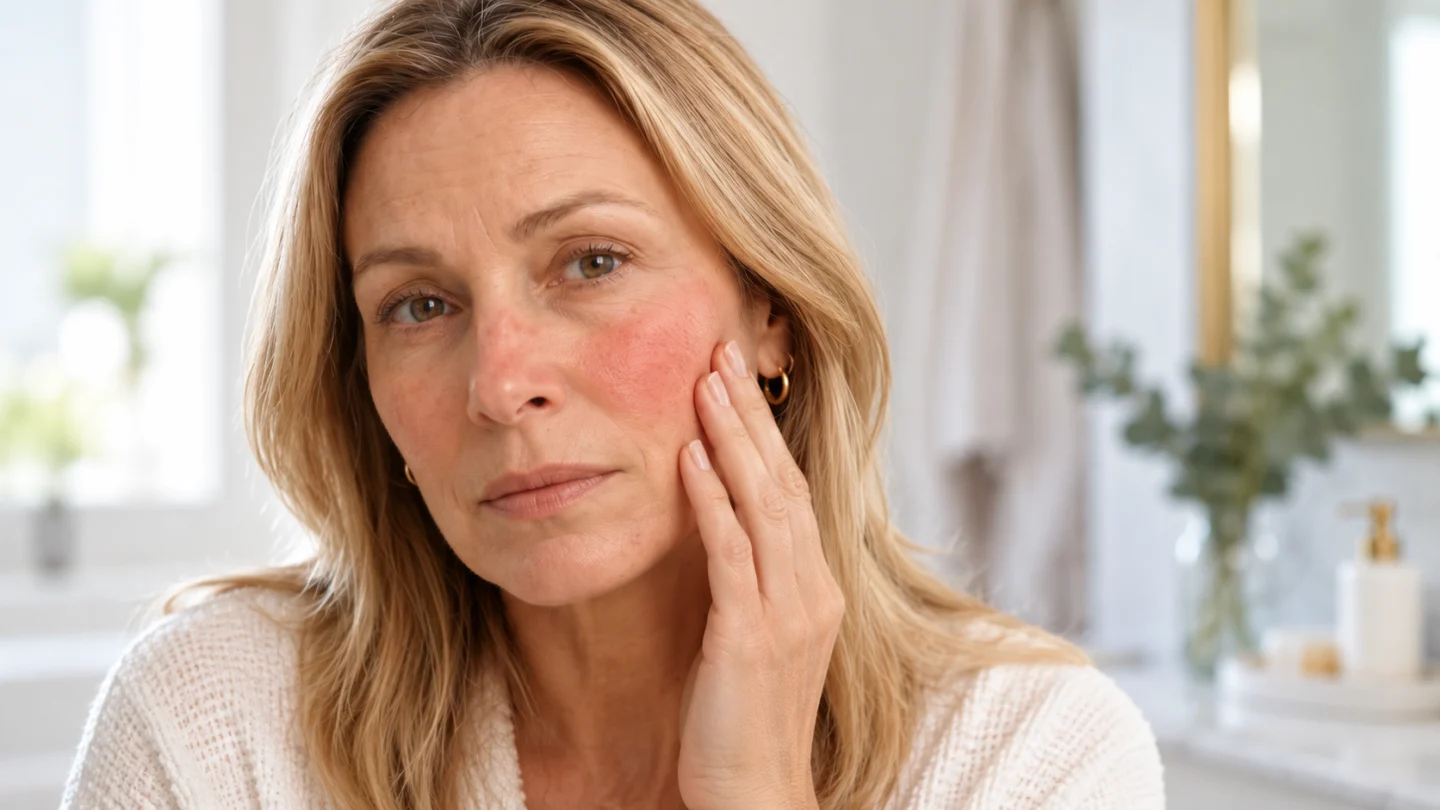
Facial redness can seem to appear out of nowhere — especially on mature skin. One day your skin feels calm, and the next your cheeks look flushed, warm or noticeably more reactive.
That does not automatically mean something serious is wrong. Heat, stress, hormonal changes, irritating skincare and a more sensitive skin barrier can all make redness more noticeable. But persistent or worsening redness is worth paying attention to.

Prefer video? Watch the short explainer above, then use the guide below to understand common triggers, what can help calm a flare, and when redness should be assessed.
Why Can Facial Redness Become More Noticeable With Age?
As skin ages, it can become drier, thinner and more reactive. The barrier that helps keep moisture in and irritants out may not recover as quickly after cleansing, exfoliation, weather changes or active ingredients.
Small surface blood vessels can also become more visible over time, especially after years of sun exposure. That can make ordinary flushing look more dramatic than it did when you were younger.
Common Triggers for Sudden Redness
- Heat: hot showers, warm rooms, exercise and hot weather can increase facial flushing.
- Stress: emotional stress can temporarily increase blood flow to the face.
- Hormonal changes: perimenopause and menopause can bring episodes of flushing or heat-related redness.
- Skincare irritation: retinoids, exfoliating acids, strong cleansers and fragranced products can irritate sensitive skin.
- Weather: cold wind, dry air and sudden temperature changes may worsen redness.
- Alcohol or spicy foods: these can trigger flushing in some people.
Could It Be a Skin Condition?
Sometimes recurring facial redness is more than temporary flushing. Rosacea, eczema and contact dermatitis can all cause redness, although they tend to have different patterns and symptoms.
Rosacea often affects the central face and may come with visible small blood vessels, burning, stinging or acne-like bumps. Eczema and contact dermatitis may be more likely to itch, scale or feel very dry. Only a qualified clinician can confirm the cause.
Redness is a symptom, not a diagnosis. The pattern and triggers often matter more than the colour alone.
— The Skincare Files
What to Do During a Redness Flare
1. Simplify Your Routine
Temporarily pause non-essential active ingredients if they sting or make the redness worse. A gentle cleanser, simple moisturiser and sunscreen may be enough while your skin settles.
2. Keep Water Lukewarm
Hot water can increase flushing and may leave dry or sensitive skin feeling more uncomfortable. Use lukewarm water and avoid scrubbing with towels or cleansing brushes.
3. Choose Fragrance-Free Products
If your skin is reactive, fragrance-free formulas can reduce one potential source of irritation. “Unscented” is not always the same thing as fragrance-free because some products use masking fragrance.
4. Protect Your Skin From the Sun
UV exposure can worsen visible redness and is a recognised trigger for rosacea in many people. Broad-spectrum sunscreen, shade and protective clothing are useful year-round.
When to Get Facial Redness Checked
Consider seeing your GP or dermatologist if redness is becoming persistent, keeps returning without an obvious trigger, or is accompanied by burning, swelling, scaling, eye irritation or acne-like bumps.
- Redness that does not settle
- Visible broken blood vessels that are increasing
- Burning, stinging or persistent itching
- Eye dryness, redness or gritty discomfort
- Swelling or skin thickening
- A rash that spreads or becomes painful
Sudden facial swelling, difficulty breathing or other signs of a severe allergic reaction require urgent medical attention.
The Bottom Line
Facial redness can flare for many reasons, and mature skin may become more sensitive to triggers that once caused no problem. Heat, hormones, stress, sun exposure and irritating skincare are all common possibilities.
Keep the routine simple during a flare, watch for patterns, and seek professional advice if the redness is persistent, worsening or accompanied by other symptoms.
References
This article is for general educational information and is not a substitute for personalised medical advice or diagnosis.