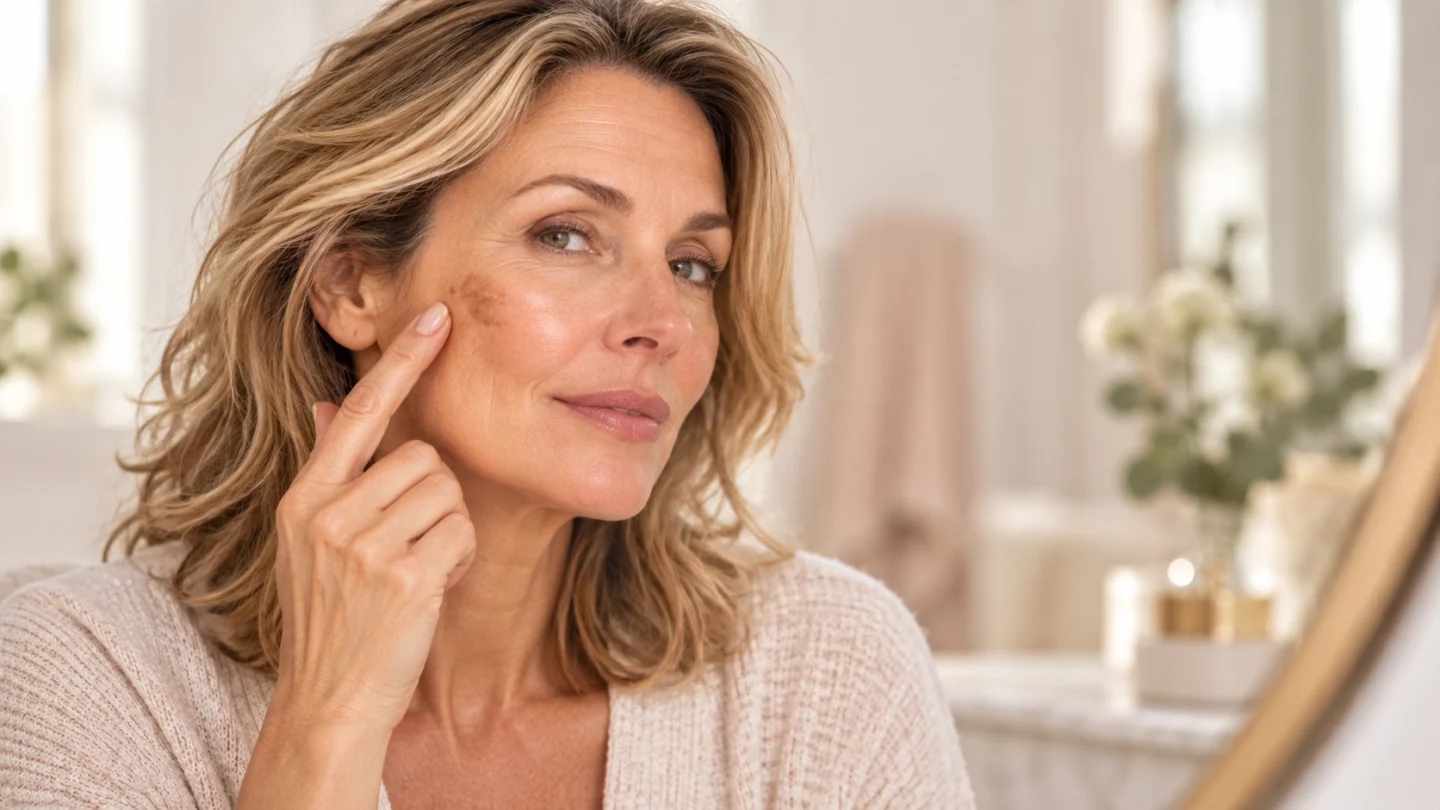
You notice a dark spot on your cheek and your first instinct is to fade it. Maybe you reach for vitamin C, an exfoliating acid or a brightening serum.
But before treating a new or changing dark spot as a cosmetic problem, it is worth asking a more important question: is this definitely ordinary pigmentation?
Most dark marks are harmless, but not every brown, black or uneven spot should be treated blindly — especially when it is new, changing or looks different from the other spots on your skin.

Prefer video? Watch the short explainer above, then use the guide below to understand when a dark spot is more than a skincare issue.
Not Every Dark Spot Is the Same
Dark spots can have many causes. Some are related to years of sun exposure, some develop after inflammation or irritation, and some are harmless growths that become more common with age. But a new or changing pigmented spot can also be a warning sign that deserves medical assessment.
That is why the safest first step is not always to fade the colour. It is to notice what the spot is doing over time.
The ABCDE Warning Signs
Dermatologists use the ABCDE guide as one way to recognise features that may be suspicious for melanoma. It is not a home diagnosis, but it can help you know when a spot deserves professional attention.
- A — Asymmetry: one half of the spot looks different from the other half.
- B — Border: the edge is irregular, blurred, scalloped or poorly defined.
- C — Colour: the spot contains several colours or noticeably uneven pigmentation.
- D — Diameter: melanomas are often larger than about 6 mm when diagnosed, but they can be smaller.
- E — Evolving: the spot is changing in size, shape, colour or appearance.
Australia’s Cancer Council also recommends paying attention to spots that look different from your other spots, as well as lesions that become raised, rough, scaly, itchy, sore, crusted or start to bleed.
Why “Evolving” Matters So Much
A spot that has looked the same for years is a different situation from one that appeared recently or has started changing. Change is one of the most useful clues when monitoring your own skin.
Take note if a spot becomes darker, grows, develops a different edge, changes texture or starts itching or bleeding. A sore that does not heal — or heals and then returns — also deserves attention.
The goal is not to panic over every freckle. It is to notice when one spot stops behaving like the others.
— The Skincare Files
Why You Shouldn’t Automatically Reach for Brightening Products
Skincare ingredients such as vitamin C, retinoids and exfoliating acids can be useful for some forms of uneven pigmentation. But they cannot tell you why a particular spot is present.
If a spot is new, changing or otherwise concerning, repeatedly treating it with strong acids or other irritating products can make the surrounding skin red or inflamed and may make it harder for you to track what is happening. Get the spot assessed first; cosmetic treatment can come later if appropriate.
What You Can Do at Home
1. Get to Know Your Baseline
Look at your skin regularly enough to know what is normal for you. Pay attention to your face, scalp, ears, neck, hands and other sun-exposed areas, but remember that suspicious lesions can also appear on areas that receive little sun.
2. Take a Clear Photo
A well-lit photo can help you compare a spot over time. Keep the lighting and distance similar so that changes in size, border or colour are easier to notice.
3. Use Daily Sun Protection
UV exposure contributes to many forms of pigmentation and also increases skin-cancer risk. Use broad-spectrum sunscreen, protective clothing, shade and other sun-protection measures as part of your daily routine.
4. Don’t Pick or Scrub the Spot
Repeated rubbing, picking or aggressive exfoliation can irritate the skin and create more inflammation or pigmentation around the area.
When to Book a Skin Check
Arrange an assessment with your GP, dermatologist or qualified skin-cancer clinician if you notice a new spot you are concerned about, or an existing spot that changes in size, shape, colour or texture.
- A spot that looks noticeably different from your other moles or freckles
- Growth or rapid change
- Multiple colours or an increasingly irregular border
- Persistent itching, tenderness or pain
- Bleeding, crusting or ulceration
- A sore that does not heal or repeatedly returns
These signs do not automatically mean skin cancer. They simply mean the spot deserves to be examined rather than treated as ordinary pigmentation at home.
The Bottom Line
Dark spots become more common as skin accumulates years of sun exposure and other changes, and many are harmless. But skincare should not replace a proper assessment of a new or changing lesion.
If a mark is stable and has been assessed as benign, then you can decide whether you want to treat the pigmentation cosmetically. If it is new, evolving or simply looks unusual to you, check it first and fade it second.
References
- Cancer Council Australia — Check for signs of skin cancer
- American Academy of Dermatology — ABCDEs of melanoma
This article is for general educational information and does not diagnose a skin lesion. If you are concerned about a new or changing spot, seek professional assessment.