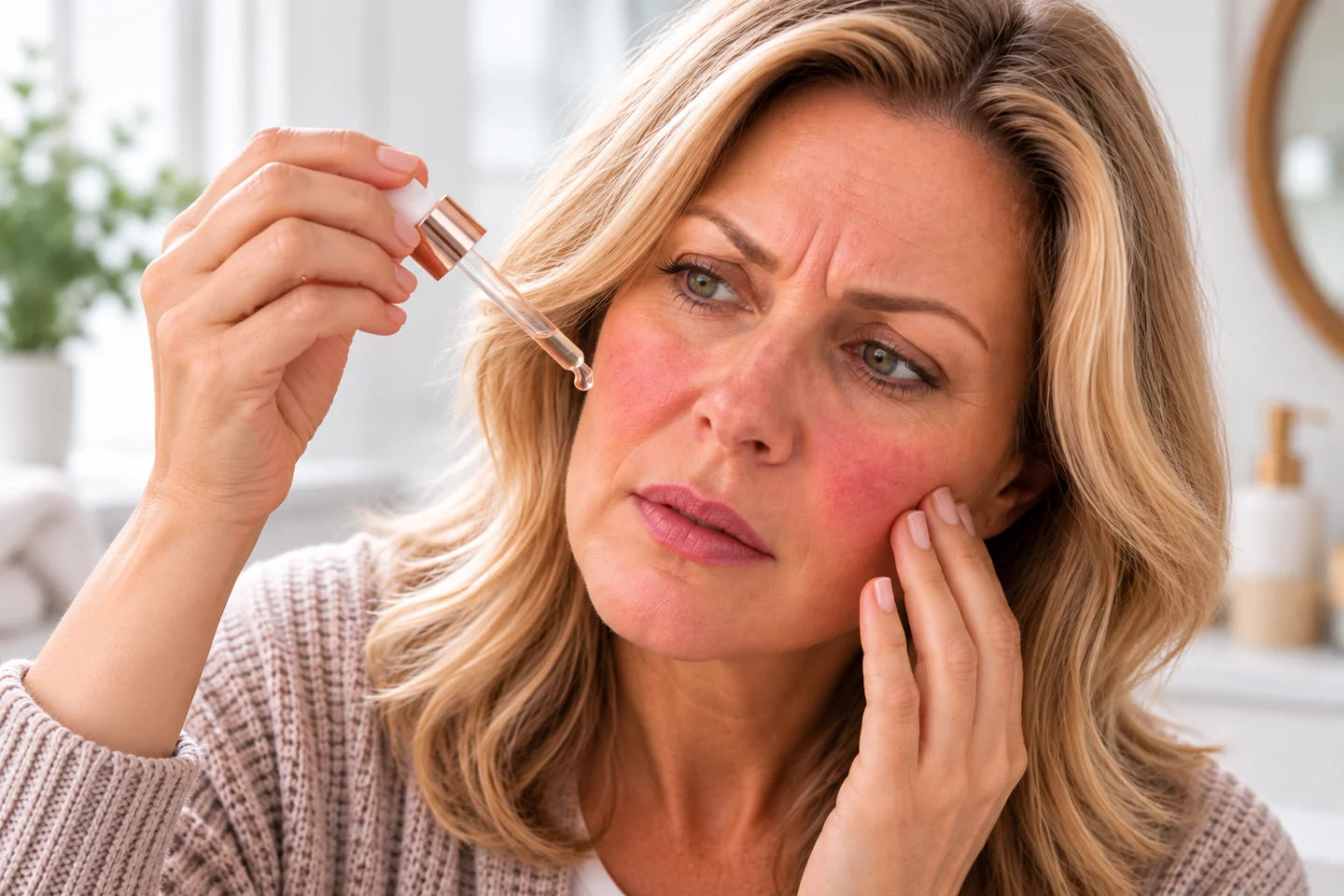
A serum that felt perfectly comfortable for months or even years can suddenly start to sting. That does not necessarily mean the product has become “bad” — sometimes your skin has changed.
Dryness, over-exfoliation, weather changes, retinoids, hormonal shifts and a stressed skin barrier can all make mature skin more reactive than it used to be.

Prefer video? Watch the short explainer above, then use the guide below to understand why a familiar serum can suddenly sting and what to do next.
Why Can a Familiar Serum Suddenly Sting?
Stinging is often a sign that the skin surface is more sensitive than usual. When the outer barrier is dry or irritated, ingredients that previously felt comfortable may penetrate more easily or simply feel more intense on contact.
This can happen even if you have not changed the serum itself.
Common Reasons Your Skin May Be More Reactive
- Over-exfoliation: using acids, scrubs or exfoliating toners too often can leave skin more reactive.
- Retinoid use: retinoids can increase dryness and sensitivity, especially when combined with other active ingredients.
- Cold weather or indoor heating: both can increase moisture loss and dryness.
- Hormonal changes: perimenopause and menopause can make skin feel drier and less tolerant of products.
- A new cleanser or treatment: irritation may come from another step in the routine rather than the serum itself.
- Product degradation: some formulations, particularly antioxidant serums, can change over time if exposed to heat, light or air.
Is Tingling Ever Normal?
Some active ingredients can cause brief tingling, but persistent burning, increasing redness, swelling or pain should not be treated as proof that a product is “working.” Discomfort that continues after application is a reason to stop and reassess.
Your skin does not have to hurt for skincare to be effective.
— The Skincare Files
What to Do If Your Serum Suddenly Stings
1. Stop the Product Temporarily
If a serum suddenly causes noticeable burning or irritation, pause it rather than repeatedly testing the reaction on already-sensitive skin.
2. Simplify the Rest of Your Routine
For a few days, focus on a gentle cleanser, a simple moisturiser and broad-spectrum sunscreen. Avoid adding new acids, scrubs or strong actives while the skin feels reactive.
3. Check the Product Itself
Look for changes in colour, smell, separation or texture, and check the recommended period after opening. If the formula appears to have changed, replacing it is safer than trying to finish the bottle.
4. Reintroduce Slowly
Once your skin feels comfortable again, you can consider testing the product less frequently. If it immediately causes the same reaction, it may no longer suit your skin.
Could It Be Contact Dermatitis?
Sometimes a new sensitivity develops to an ingredient you previously tolerated. Contact dermatitis can cause redness, itching, burning, swelling or scaling. Fragrance, preservatives and other ingredients can all be triggers in susceptible people.
If the reaction keeps returning with the same product, or spreads beyond the area where you applied it, professional assessment may help identify the cause.
When to Get It Checked
- Burning or pain that does not settle
- Persistent redness, swelling or itching
- Cracking, weeping or blistering skin
- Repeated reactions to multiple normally gentle products
- Symptoms around the eyes
- A rash that continues after stopping the suspected product
Seek urgent medical care for facial swelling, breathing difficulty or other signs of a severe allergic reaction.
The Bottom Line
If your usual serum suddenly stings, do not assume you need to “push through.” Your skin may simply be drier, irritated or more reactive than it was before.
Pause the product, simplify your routine, check whether the formulation has changed, and give your skin time to settle before deciding whether to reintroduce it.
References
This article is for general educational information and is not a substitute for personalised medical advice or diagnosis.